
InvestU Application
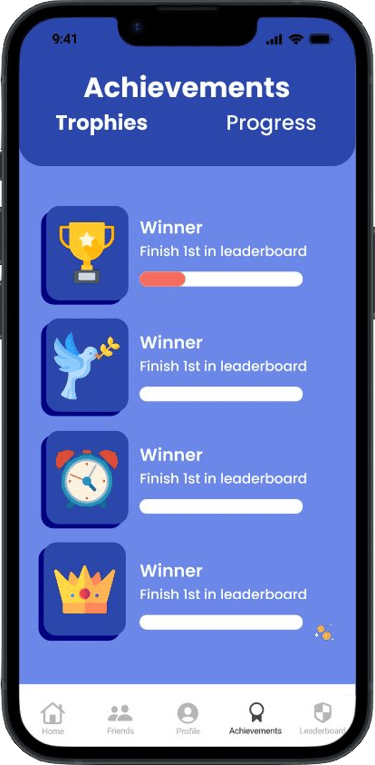
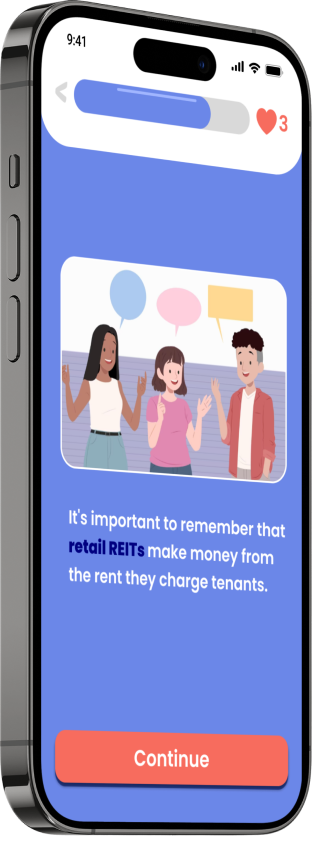
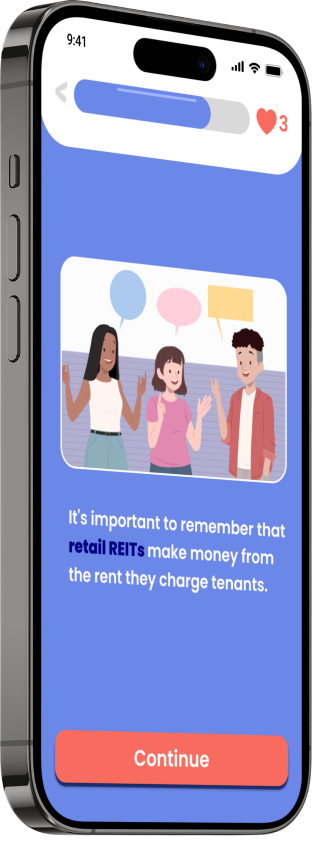
A research-led UX project using the Double Diamond method to understand why teenagers feel scared and confused about investing, and how gamification can make financial literacy feel accessible, rewarding, and even fun.
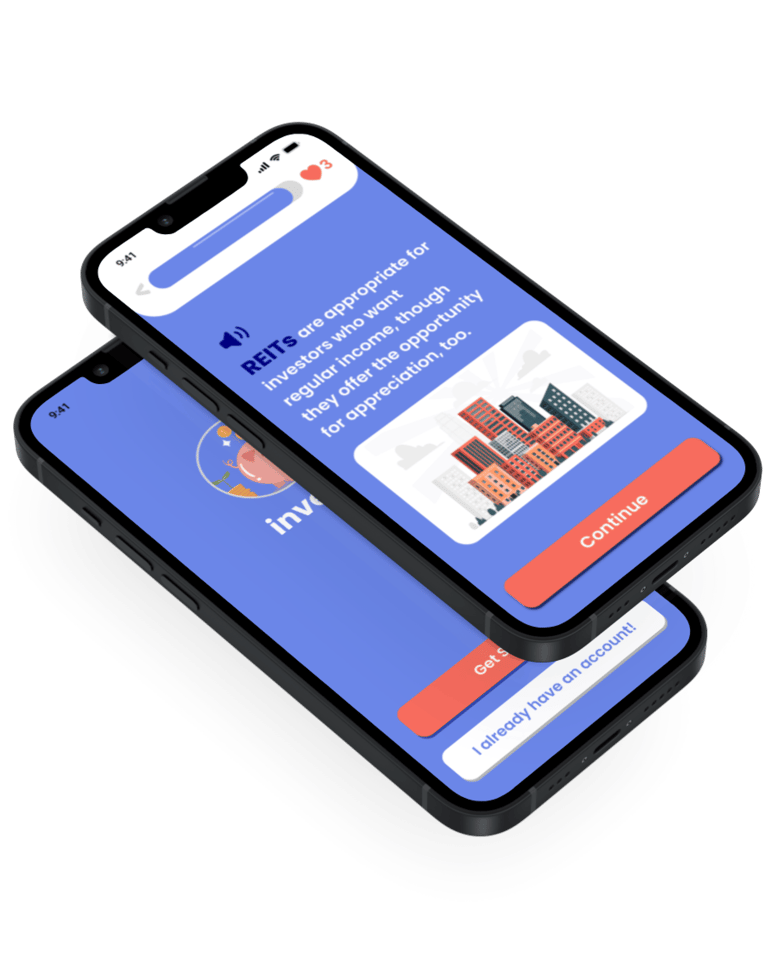
The Problem
Why aren't we giving young people the financial tools they need before they need them?
Teenagers in North America are entering adulthood with little to no financial literacy. Despite managing their own money earlier than ever, through part-time jobs, digital payments, and online banking, most have never been taught how to save, budget, or invest.
This isn't just an education gap. It's an emotional one.
Through early secondary research, I found that:
Financial anxiety among young people is rising
Most school curriculums don't include investing education
Existing apps either oversimplify or overwhelm young users
The core problem:
Teenagers want to learn about money, but existing tools make them feel stupid for not already knowing.
My Role:
Lead UX Researcher + UX/UI Designer
Led research planning and interview design
Conducted user interviews (5 participants)
Designed and analyzed survey (22 responses)
Led affinity diagram and thematic analysis
Conducted competitive analysis
Led usability testing (6 participants)
Facilitated ideation sessions (I Like, I Wish, What If)
Project Overview
Tools
Figma, Miro, Google suite, Slack, Trello, Zoom
Most of us were never taught how money works. Not really. And by the time we figure it out, we've already made costly mistakes.
InvestU is a mobile app designed to help teenagers and young adults learn about investing through bite-sized, gamified lessons. But before a single screen was designed, I led a full research process to understand the real emotional and educational barriers young people face around money, because designing the right solution required deeply understanding the problem first.


User Interviews: 5 participants
I designed a semi-structured interview protocol and conducted 5 in-depth interviews with teenagers and young adults to go beyond survey data and understand the lived emotional experience of learning about money.
Interview 1: Camilla, 26
Camilla had started investing through Questrade after being introduced to it by her brother. Her insights revealed the emotional dimension of financial literacy clearly:
"A lot of fear. I still don't feel like I'm super knowledgeable."
"It always felt very foreign and very scary before my brother opened my eyes to it."
She described her bank calling her with investment advice using "a bunch of really big words", leaving her more confused than helped. She learned best through conversations and hands-on experience, and felt most supported when she could ask questions directly. She hadn't learned anything meaningful about investing in school, and still felt the gap years later.
Interview 2: Katelyn, early childhood educator
Katelyn started investing in ETFs and crypto after discovering educational content on TikTok and YouTube during 2020. Her insights highlighted the power of visual, engaging, short-form content for financial learning:
"The way the content was delivered is a lot easier to understand than on traditional websites."
She described her most memorable learning moment as seeing a TikTok creator show their real investment results, "I made X amount just holding that stock for five years. Let me learn more." Concrete, visual examples were what finally made investing feel real and accessible to her. She also noted that terminology was the hardest barrier: "It's basically a different language."
Her most powerful insight for our design: a budgeting activity she saw where a mom showed her kids their fixed expenses until they realized "I don't have any money left for anything fun." That concrete, experiential learning approach directly influenced our gamification direction.
She also confirmed that timing matters: starting early with investing is the most crucial factor, and the earlier someone is exposed to financial concepts in an engaging way, the better their long-term outcomes.
Interview 3: Arian
Arian was bamboozled between choosing where to put his money. He felt there was an overwhelming amount of information available but no clear, trusted starting point. He was inspired by the concept of learning through short videos and wanted something that could teach him through an engaging, non-intimidating format.
"I'm bamboozled between choosing where I would want to put my money."
Interview 4: James
Interview notes from another participant confirmed the pattern: investing felt inaccessible due to complex language, distrust of banks and financial institutions, and a strong preference for learning through doing rather than reading.
Interview 5: Niketh (teenager)
Niketh was one of our youngest participants, likely still in high school, and his responses were some of the most authentic and unfiltered of all our interviews.
His father introduced him to investing through real estate, buying townhomes and renting them out, which shaped his perception of investing as something concrete and tangible rather than abstract.
"I still feel like there should be some sort of uneasiness because you have to think about it a lot."
Niketh described learning best verbally and feeling most supported when people learn together without competition, a direct validation of our social learning direction. Most powerfully, when asked about learning formats, he independently referenced Duolingo-style streaks as something he found helpful, directly validating our gamification and streak mechanic without us ever prompting him.
"When there are other people also trying to learn, but it is not like a competition. Everyone working together, supporting each other."
He knew about stocks and real estate but was confused about bonds and mutual funds, confirming the need for bite-sized, concept-by-concept learning rather than overwhelming users with everything at once.
Notable quotes that shaped our direction:


Camilla:
“A lot of fear. I still don’t feel like I’m super knowledgeable”
Arian:
“I would still say I’m somewhat confused. I’m bamboozled between choosing where I would want to put my money”
Research
Double Diamond Phase 1: Discover
I used the Double Diamond design thinking framework to guide the process. The first diamond focused entirely on research and discovery, understanding the problem space deeply before jumping to solutions.
Research Goals
Before designing anything, I wanted to understand:
What do teenagers and young adults actually know about investing?
What emotions come up when they think about money?
Where does the fear and confusion come from?
How do young people currently learn about finances?
What would motivate them to engage with a financial learning tool?
What I heard wasn't just confusion, it was shame and fear. That became a core design principle: the app had to feel safe and encouraging, not intimidating.


Research Methods
Survey, 22 responses
I designed and distributed a survey targeting teenagers and young adults to understand baseline financial literacy levels, learning preferences, and emotional responses to investing.
Key statistics:
100% of participants said they did not learn enough about investing during their school years
Over 70% said they learn best through visual means
The majority rated financial education as extremely important (5/5)
Most participants had only basic knowledge of investment types, primarily stocks and ETFs
Common investment goals included long-term wealth building, saving for university, and buying property
Participants were inspired to invest primarily through family members, not school
After completing all interviews and analyzing survey data, I organized insights into an affinity diagram to identify patterns across participants. The following themes emerged:
Theme 1: Unsure about investing: Participants were scared, easily confused by terms, had low risk tolerance, and found stocks stressful and scary. The language of investing felt like a foreign language.
Theme 2: Schools lack investing knowledge: 100% of survey respondents confirmed they did not learn about investing in high school. This was a universal experience across all age groups interviewed.
Theme 3: Learning through videos and podcasts: TikTok, YouTube, and podcasts were the primary learning channels. Short, visual, story-driven content was most effective. Participants were motivated when they could see real results from real people.
Theme 4: Hands-on and verbal learners: Multiple participants described themselves as kinetic or verbal learners who learn best by doing or listening rather than reading. One participant independently referenced Duolingo-style streaks as an effective learning format, directly validating our gamification direction. Theoretical explanations didn't land, concrete examples and practice did.
Theme 5: Inspiration comes from family: Most participants were first introduced to investing by a brother, father, or other family member. Very few had institutional or school-based entry points.
Theme 6: Property is important: Long-term investment goals consistently included buying a home, a powerful motivator for teenagers thinking about their future.
Theme 7: Pain points: Figuring out which online sources to trust, stocks being confusing, schools not teaching enough, and not trusting banks or financial institutions.
Theme 8: Goals: Grow money from money, be financially secure, understand how to invest, save for university, and help family financially.


Affinity Diagram & Thematic Analysis
Empathy Map
Thinks and feels: Investing is scary and confusing. Confused about all the information. Doesn't like high risk. Wants to make a profit. Investing is risky.
Hears: Too many factors when it comes to investing. A lot of people are scared of investing. Inspired by family members.
Sees: School isn't teaching enough about finances. Inspired by family members to invest.
Says and does: Wants to buy property. I feel I learn best by doing. Hands-on learner. I learned a lot by watching short videos. I want to learn but I'm not sure how.
Pain: Figuring out which online source to trust. Stocks are confusing. School doesn't teach enough about finances. Doesn't trust banks/institutions.
Gain: Grow money from money. Be financially secure. Understand how to invest. Save for university.
To synthesize research findings into a holistic picture of our user, I created an empathy map for our target user:


Competitor Analysis
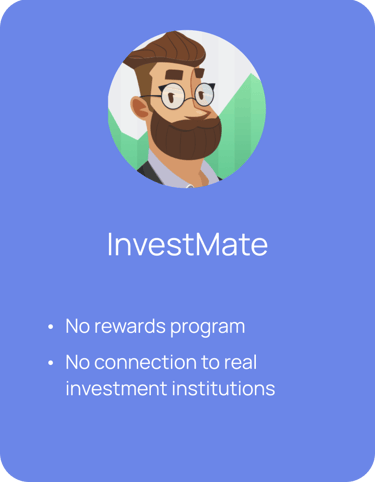
I analyzed 4 competitors; 2 direct and 2 indirect, to understand the existing landscape and identify design opportunities.
Direct competitors:
InvestMate: gamified investing education app. Strength: engaging onboarding. Weakness: doesn't teach how to actually make trades.
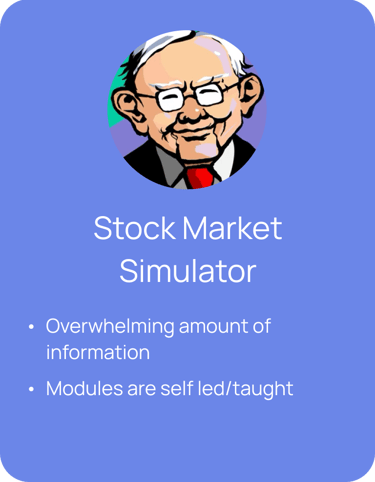
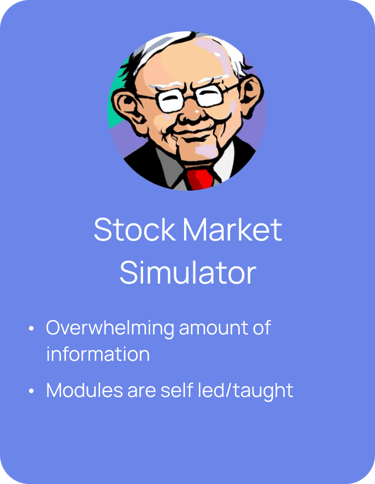
Stock Market Simulator Game: simulates real trading. Strength: hands-on experience. Weakness: no educational context around concepts.
Indirect competitors:
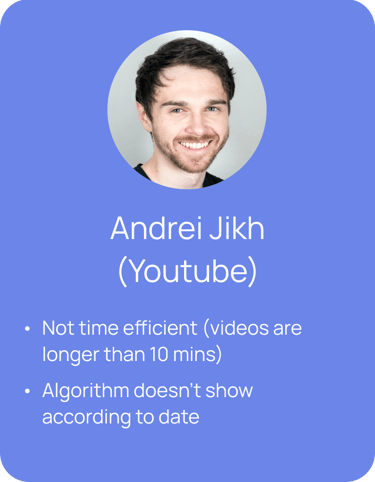
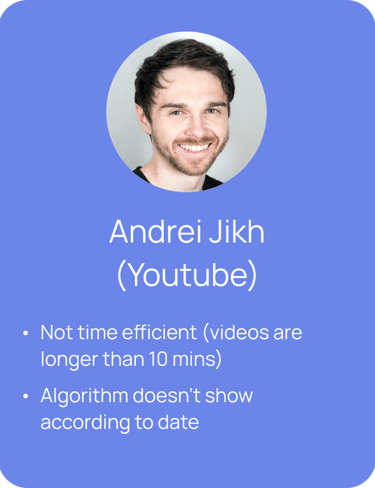
Andrei Jikh (YouTube/TikTok): financial content creator. Strength: highly engaging, uses real results to motivate. Weakness: passive learning, no practice component.
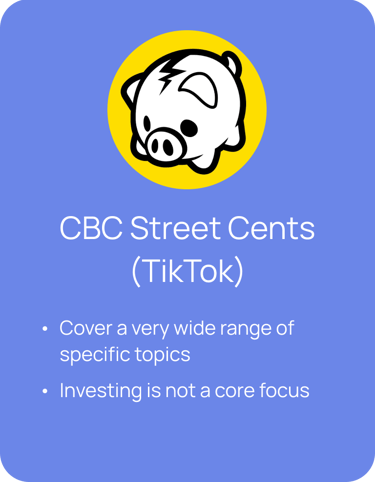
CBC Street Cents (TikTok): financial literacy for youth. Strength: relatable, youth-focused. Weakness: no gamification or progress tracking.
Key gap identified: No existing tool combined education, practice, gamification, and progress tracking in one place for a teenage audience. Most either taught passively or simulated without educating. InvestU had the opportunity to bridge both.
Define
Who?
Teenagers and young adults
What?
The overwhelming amount of information is scary
When?
Often the problem begins during Highschool
Why?
Crucial in setting young people up for long term financial success

User Persona
Nick Thomson
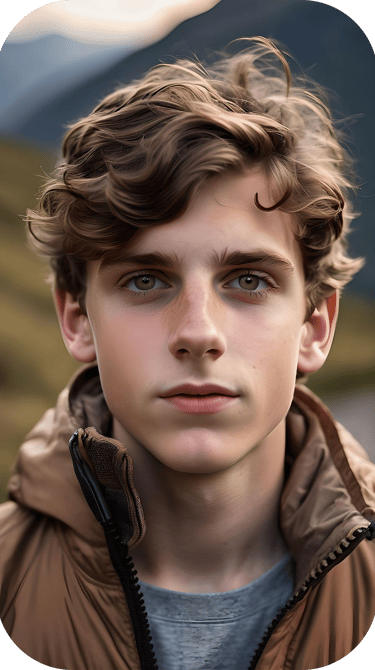
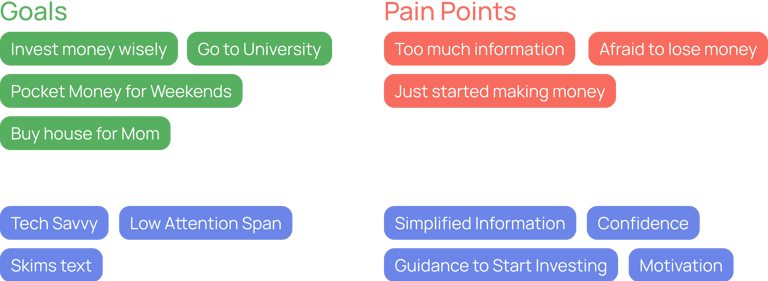
Nick is a 17 year-old high school student who just started making his own money. He is the oldest of three kids and the first who wants to go to University but is scared about how much it'll cost. He feels that he hasn't learnt much about financial matters in school and is confused about managing his expenses. He doesn't know where to start.
Based on research findings, I developed Nick Thomson, who works part-time at a restaurant.
I Like, I Wish, What If Ideation Research
Before moving into design, I facilitated an ideation exercise with participants to understand what they would want from a financial learning app.
What If:
I could invest and learn from the same app
I could learn everything on one place
I could get rewards for putting what I learned into practice
It was super easy to learn about investing
I could ask an expert for help when I don't know something
I was paid for learning
I Like:
Apps that are easy to use and simple
Winning rewards for completing streaks (e.g. diamonds for 1 week streak)
Revising what I learned so it sticks in my brain
Tracking my personal progress
Seeing how other people achieve their goals
I Wish:
I could learn about investing in lay terms
I could practice what I learned
I could compete with people I know
Everything was in one place
I was less intimidated
I could learn in a fun way
These insights directly shaped the three core features we prioritized:
gamified learning
a rewards and progress system
a competitive leaderboard.
Feature Prioritization Matrix
Using research insights, we plotted potential features on a complexity/priority matrix:
High priority, high complexity: Gamification: the core mechanic of the entire app. Research confirmed users wanted to learn by doing, earn rewards, and compete with friends.
High priority, medium complexity: AI Bot for asking questions: addressing the "I don't know who to trust" pain point directly.
Medium priority, low complexity: Rewards for streaks: directly inspired by "I like" research exercise.
Medium priority, low complexity: Rewards for revising what is learned: supporting the kinetic learner insight.
Supporting feature: Progress tracker: essential for motivation and continuing engagement.
Problem Statement
For teenagers and young adults who want to learn about investing but feel overwhelmed, intimidated, and underserved by existing educational resources, how can we design an engaging and accessible platform that builds financial confidence through hands-on, gamified learning?
HMW Statement
How might we design a gamified financial literacy app that helps teenagers learn investing concepts in a fun, bite-sized, and rewarding way, so they can build financial confidence before entering adulthood?
Key Insights & Design Implications


Every design decision below traces directly to a research finding.
Design Process
Double Diamond Phase 2: Develop & Deliver
Storyboard
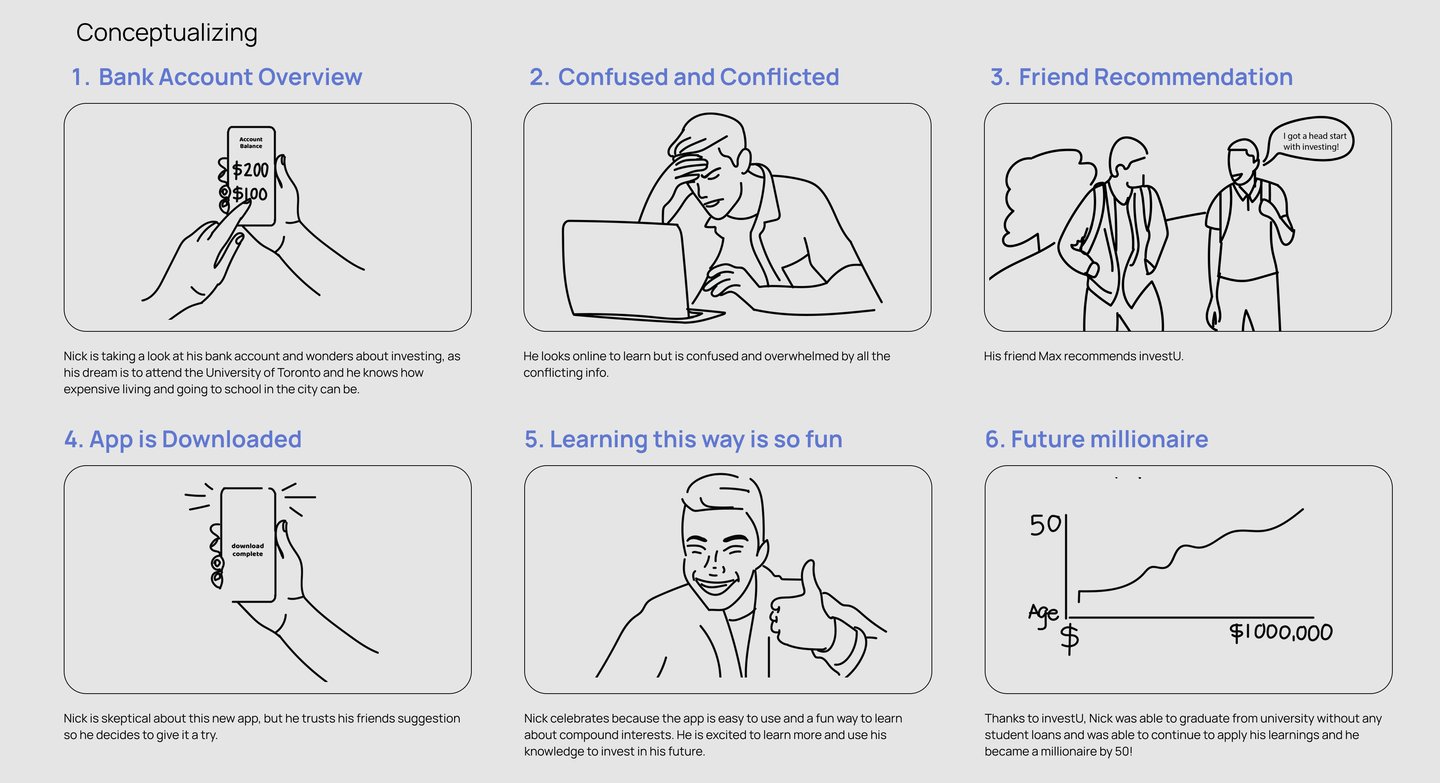
To bring Nick's journey to life and align the team around the user's emotional experience, I contributed to a storyboard:
This storyboard became the emotional anchor for every design decision that followed.
Sketches
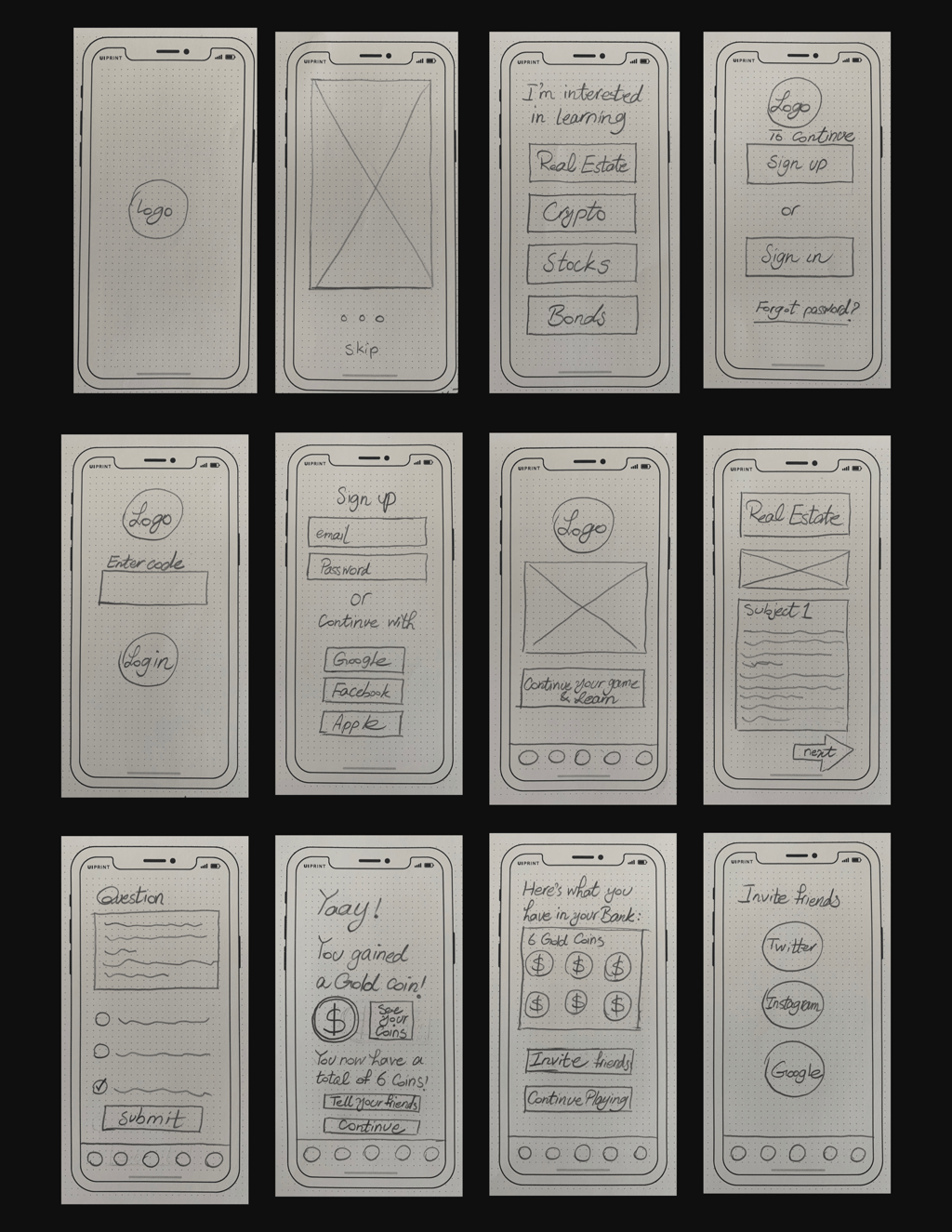
I explored multiple approaches through paper sketching before committing to digital wireframes. Sketches covered the gameboard layout, concept cards, question screens, reward animations, progress tracking, and the leaderboard, each mapped directly to a research finding about what would motivate young learners.
User Flows
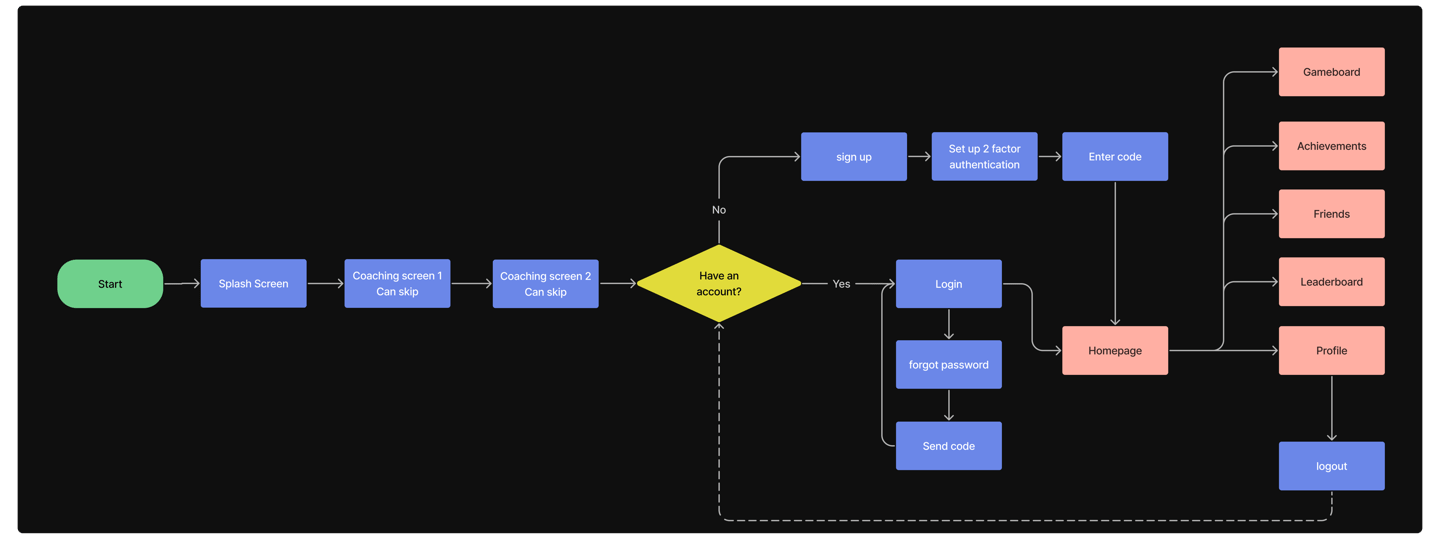
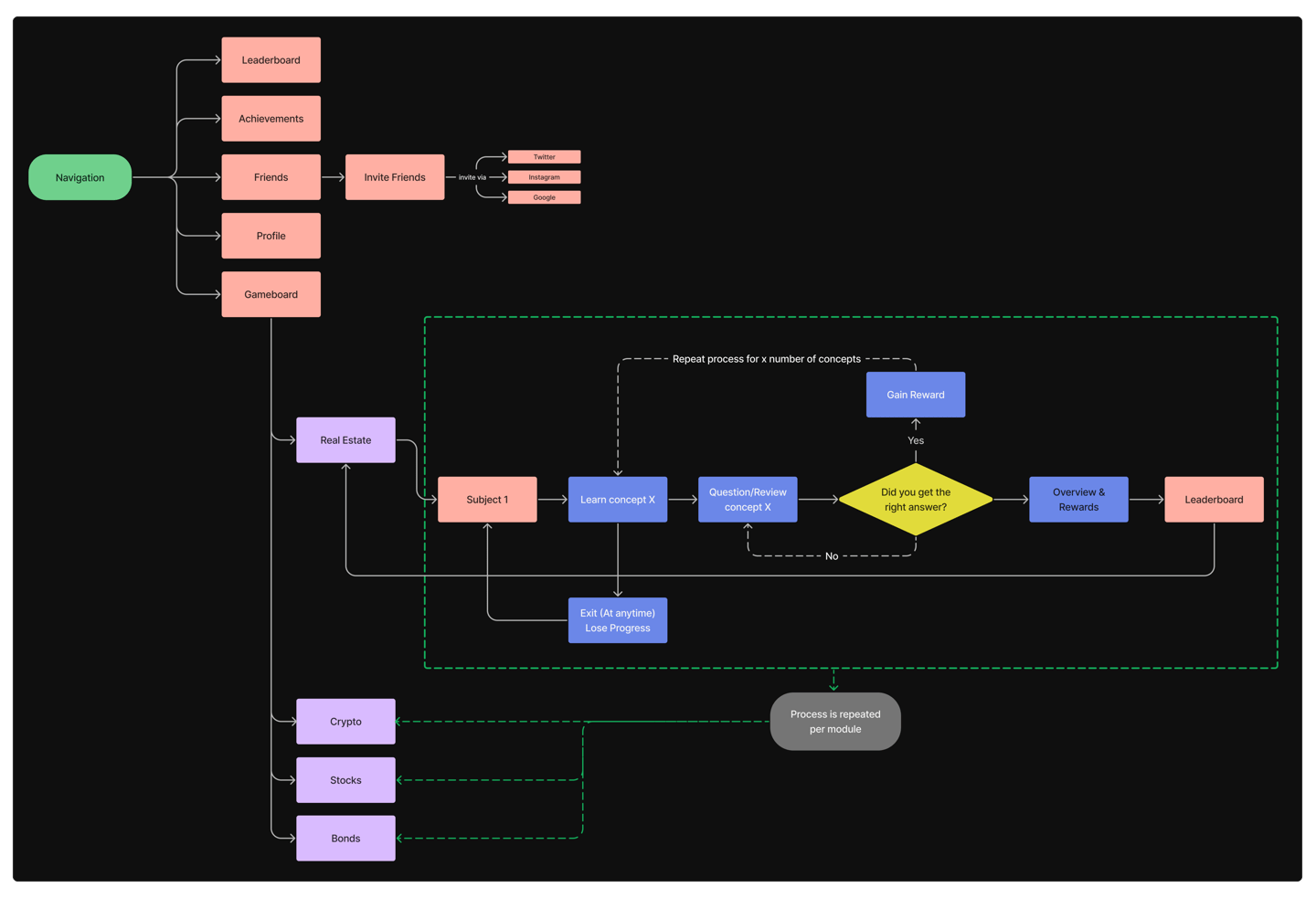
Onboarding to Home Flow
Home to Game Flow
In the next step we imagined how the user would go through the application and created the user flows and iterated them. Here are the two most important user flows:
The game flow was designed as a loop, addressing the research insight that learning investing is a continual process that benefits from repetition and reinforcement.
Wireframing
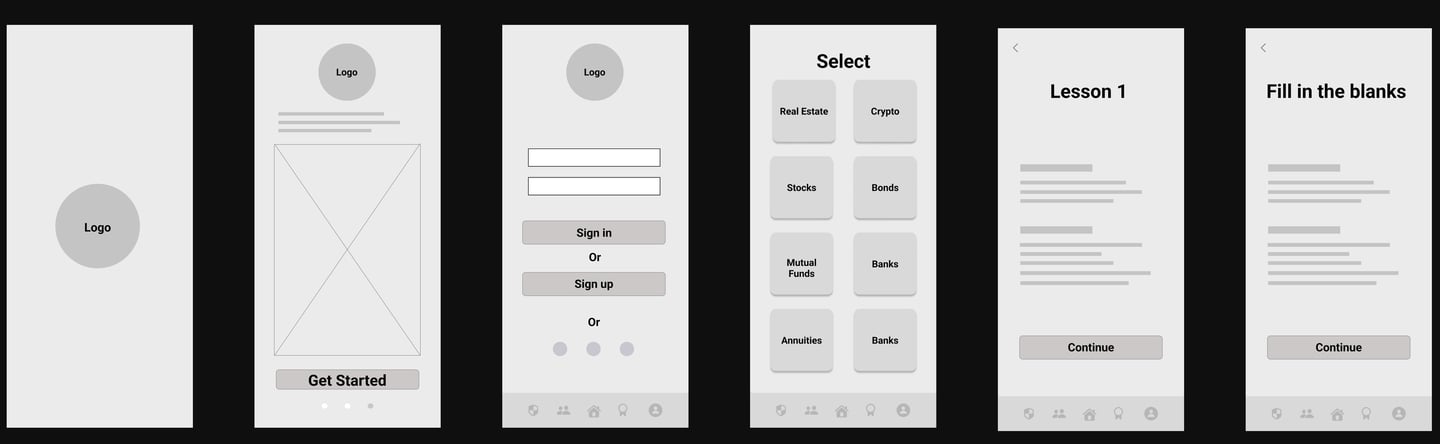
Based on research insights, I designed wireframes covering:
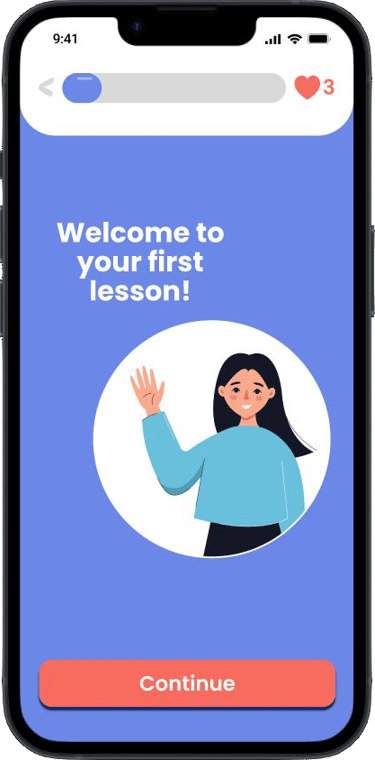
Onboarding with coaching screens explaining the app's value
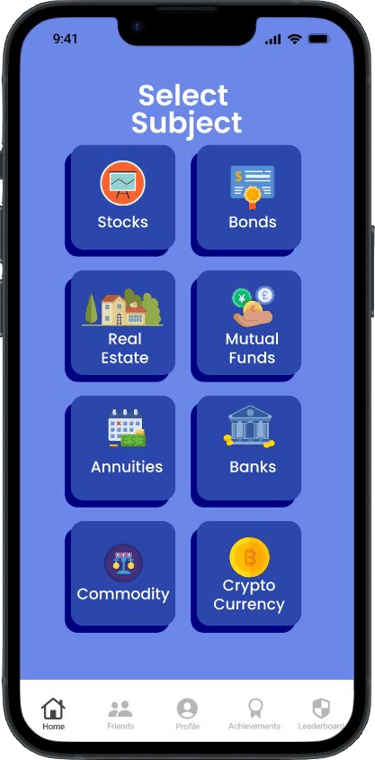
Topic selection based on what users want to learn first
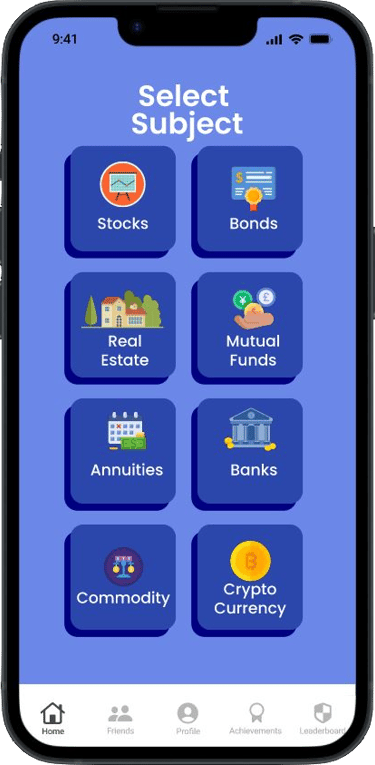
Gameboard showing all investment topics (Real Estate, Crypto, Stocks, Bonds)
Bite-sized learning screens followed immediately by quiz questions
Reward animations for correct answers
Progress tracking across all lessons
Leaderboard for social motivation
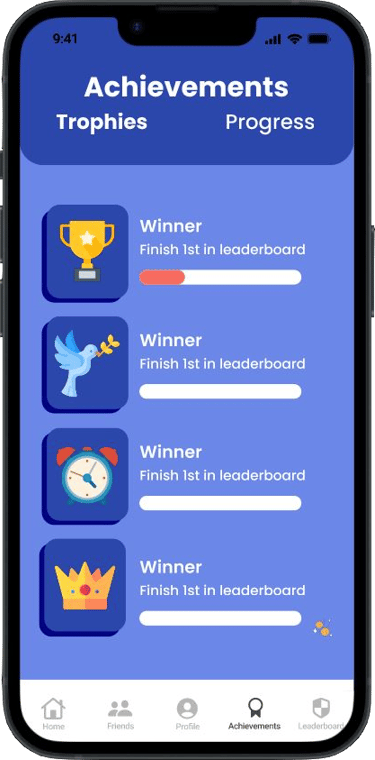
Profile and achievements screens
Low Fidelity Prototyping
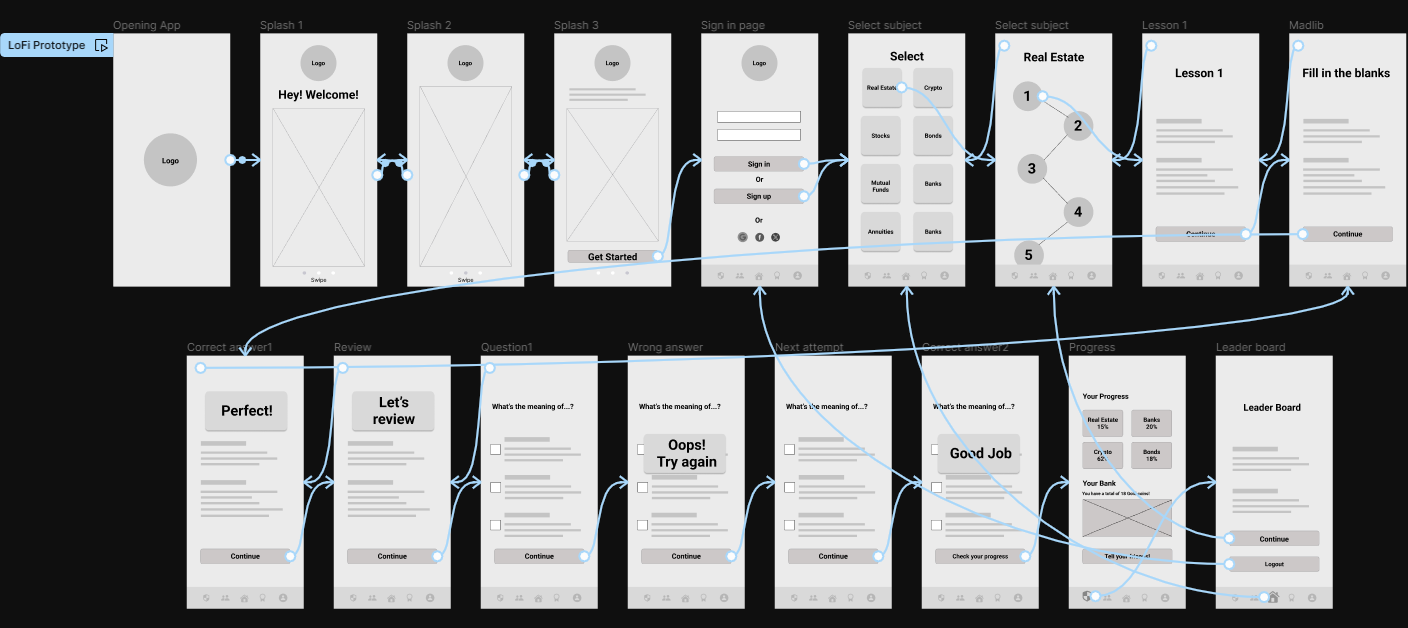
Usability Testing with 6 Participants
What worked well (confirmed by testing):
App looks cool and visually engaging overall.
Navigation was easy to follow.
Pathway through the gameboard was liked a lot.
Animation on the tiles was appreciated.
Coaching screens felt like an educational journey.
Sign in with third party was great.
Read-aloud feature was liked.
Physical drag interaction for words was satisfying.
Color palette was well received.
Variety of categories to learn felt motivating.
Confusing elements (that we needed to fix):
Confused about 5 lives in home but only 3 in learning module, inconsistency created frustration.
"Level Complete" screen vocabulary was not informative.
Coins reward after completing a level was nice but the amount felt arbitrary, users wanted to know what coins were for.
Users were wondering what the "fire" mechanic did.
Excessive tile shadows on gameboard looked a little silly.
Back button issues:
Multiple participants assumed tapping X would save progress; it didn't, causing frustration
No clear way to navigate back to the home screen from the Real Estate screen
Navigation bar:
Labels were missing from tab bar icons; users didn't know what each icon meant
1-2 bottom tab icons were moved to the navigation bar on the home page for less clutter
Pain points:
Users wanted to know what each level was before starting it
Only text on teaching screens was not sufficient; needed visual support
Review page felt like it should come after a delay rather than immediately
Leaderboard:
One participant didn't think a leaderboard was necessary
Another wanted a task bar for leaderboard instead of a full pop-up
What I tested:
Can users navigate the onboarding flow without confusion?
Do users understand the game mechanics intuitively?
Does the progress tracking feel motivating?


After organizing testing insights, I used a priority matrix to decide what to fix immediately vs. later:
Do it now (high value, low effort):
Add labels to navigation bar
Include back buttons throughout
Better coaching screen describing game mechanics
Do it next (high value, higher effort):
Add glossary so users can see all lessons
Color completed levels green to indicate finished status
Priority Matrix — Changes After Testing
I conducted usability testing with 6 participants to validate design decisions before moving to high fidelity. After testing, I organized all insights into a thematic analysis to prioritize changes.
Hi Fidelity Prototype
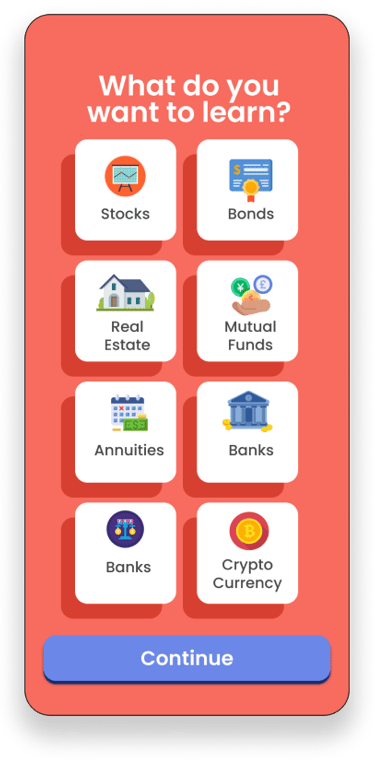
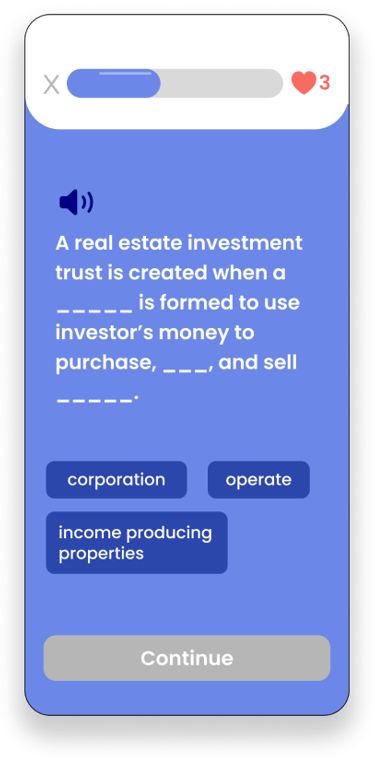
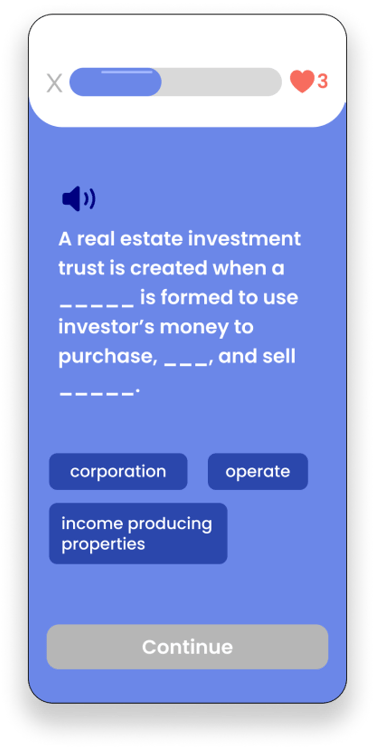
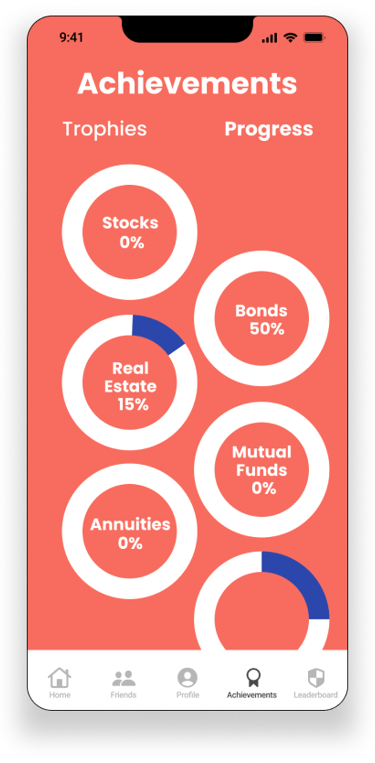
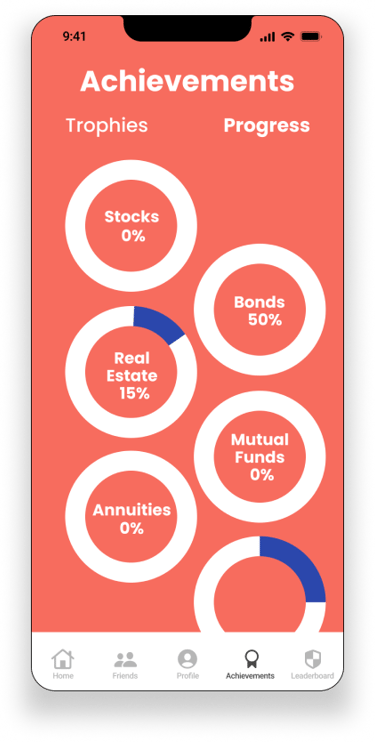
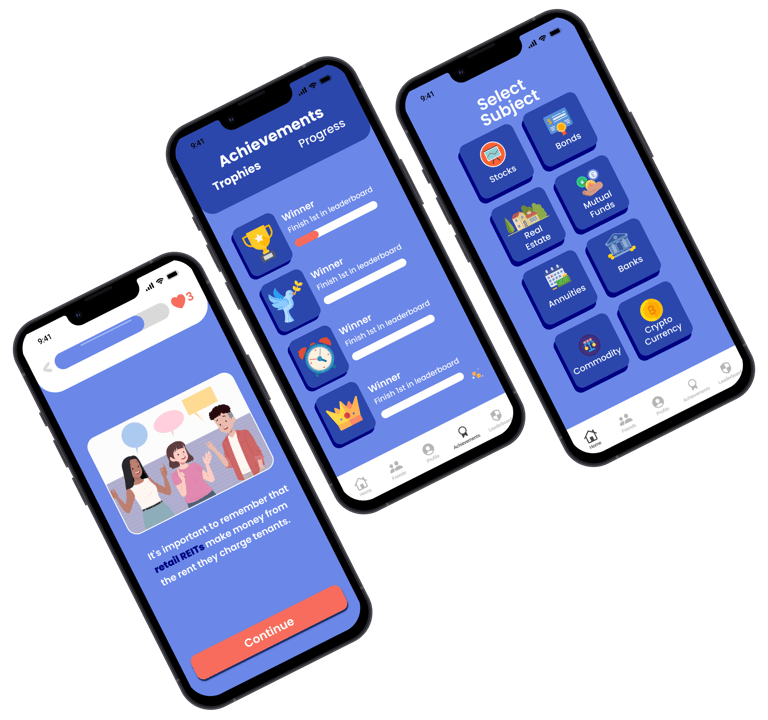
We then moved on to creating Hi Fidelity prototype and focused on two flows:
Game flow
Achievements and progress flow
Key Iterations after Usability Testing
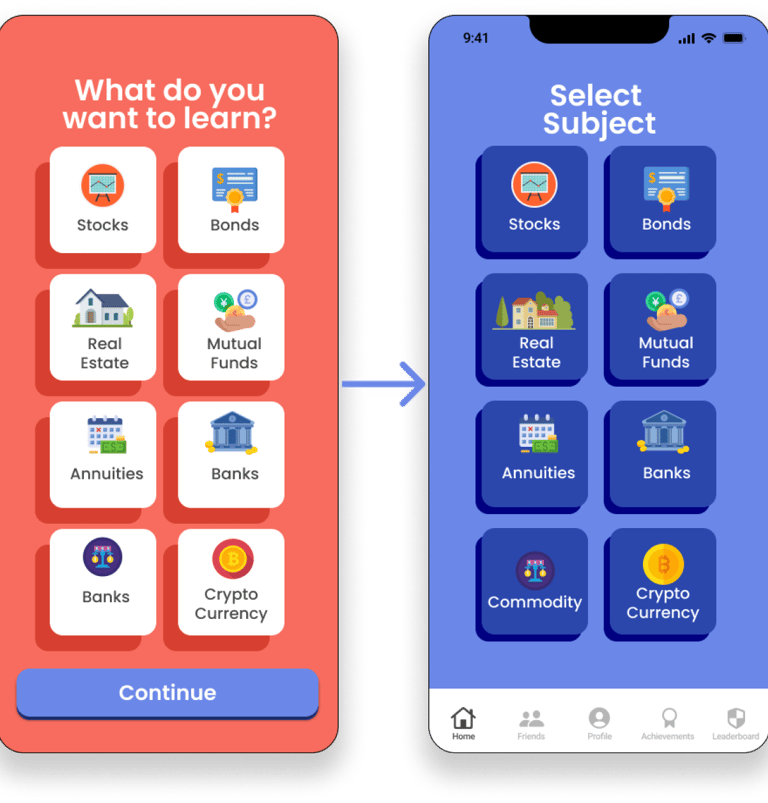
As well as conducting usability testing with Lo-Fi prototype, I continued testing with Hi-Fi prototype and iterated the design based on the data gathered.
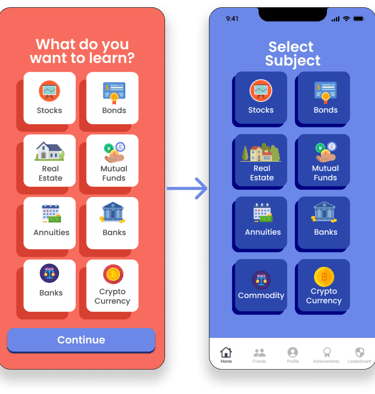
Iteration 1: Gameboard centralized
Research finding: users struggled to return to the gameboard after starting onboarding. The gameboard was too buried. Also the orange color was not the users' favorite. (A-B Testing)
→ The gameboard was moved to a central, immediately accessible location in the navigation. The background colour was changed to Blue.
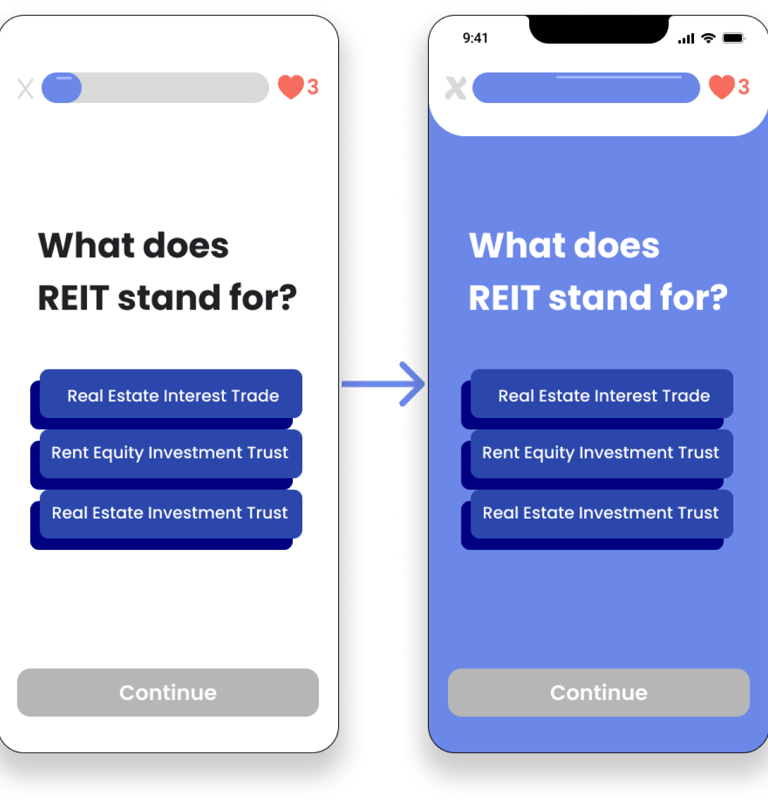
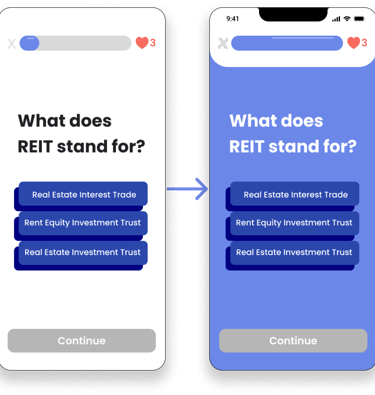
Iteration 2: Progress bar unified
Research finding: the progress bar reset between the learning phase and question phase, confusing users who couldn't tell how far they'd progressed overall.
→ The progress bar was unified across the entire game flow, making progress feel continuous and motivating.
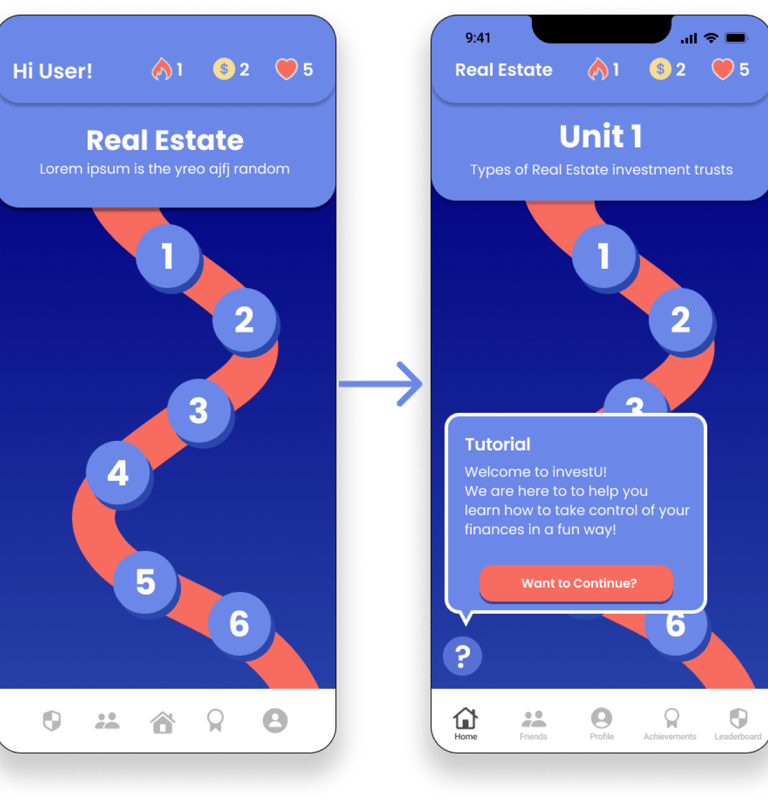
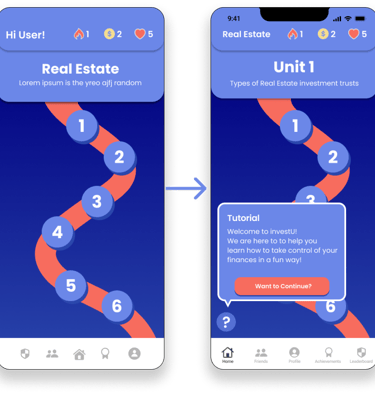
Iteration 3: Coaching pop-ups added
Research finding: users were confused about game mechanics like lives and coins; they didn't know the rules.
→ Coaching pop-ups were added at key moments to explain mechanics without overwhelming users upfront.
Iteration 4: Navigation labels added
Research finding: users didn't understand what each bottom tab icon represented.
→ All navigation icons were labeled clearly, and 1-2 icons were moved from the bottom bar to the home page navigation to reduce clutter.
Iteration 5: Level completion clarity
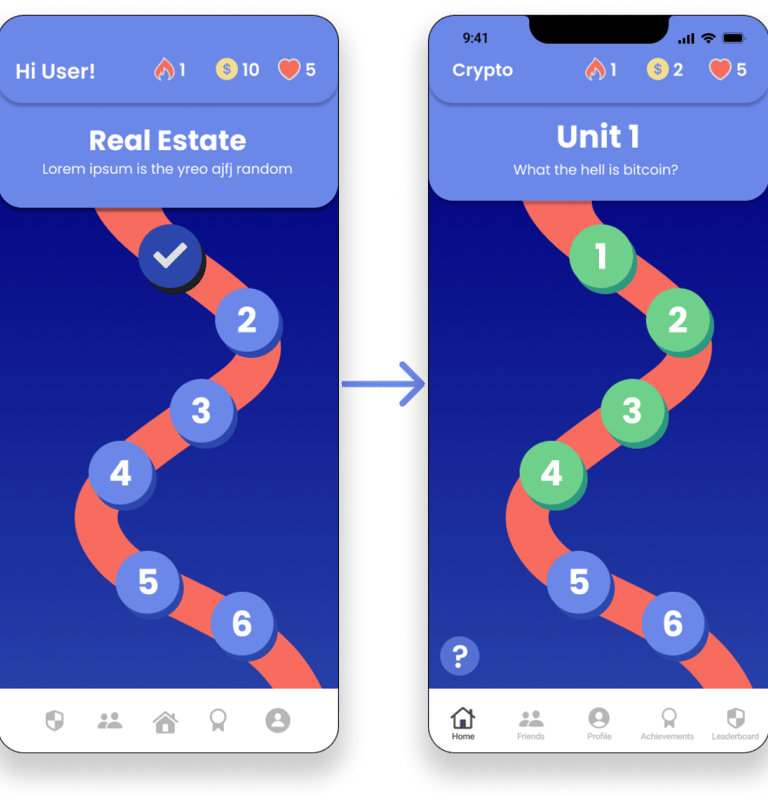
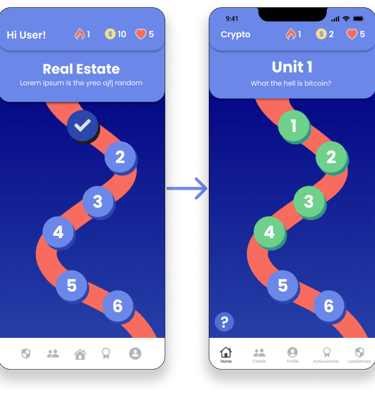
Research finding: completed levels weren't visually distinct from incomplete ones.
→ Green completion indicators and a flag system were added to visually communicate progress at a glance.
Link to Prototype
Delivery
The final hi-fi prototype was delivered as an iOS app design, covering onboarding, the gameboard, individual learning modules, quiz mechanics, reward animations, progress tracking, and the leaderboard; all grounded in 5 user interviews, 22 survey responses, competitive analysis, and 6 rounds of usability testing.
Next Steps
Conduct accessibility-focused usability testing with teenagers with diverse needs, including those with learning disabilities.
Validate findings with a larger, more diverse participant pool across different regions and income levels.
Partner with financial literacy experts to audit the accuracy of educational content.
Add an AI bot feature to allow users to ask questions when confused; rated high priority in our feature matrix.
Longitudinal study: does InvestU actually improve financial confidence and behavior over time?
Explore integration with real investment platforms for users who are ready to move from learning to doing.
Takeaways
What this project taught me as a researcher:
Emotions are data. The most valuable insights came not from survey statistics, but from the fear in participants' voices. Camilla's quote, "A lot of fear. I still don't feel like I'm super knowledgeable" told us more about the design challenge than any number could.
The best feature ideas come from users, not designers. The "I Like, I Wish, What If" exercise surfaced the gamification and rewards direction more clearly than any brainstorm session could have. Users told us exactly what they wanted, we just had to listen.
Test early, test often. Our usability testing with 6 participants revealed critical navigation failures and mechanic confusion that would have shipped undetected. Each finding made the app meaningfully better.
Research findings must drive decisions. Every design choice in this project, gamification, bite-sized learning, the rewards system, the leaderboard, the coaching pop-ups, can be traced back to a specific user insight. That's the standard I hold myself to.
The gap between knowing and feeling ready is emotional, not informational. Users didn't lack access to information about investing. They lacked the confidence and safe space to learn it without fear of failure. InvestU's design tried to create that space.
Credits
This project was a team effort from start to finish. Special thanks to my teammates Rebecca, Daniel, and Neha for their collaboration, creative energy, and commitment to building something that genuinely matters to young people's futures.