
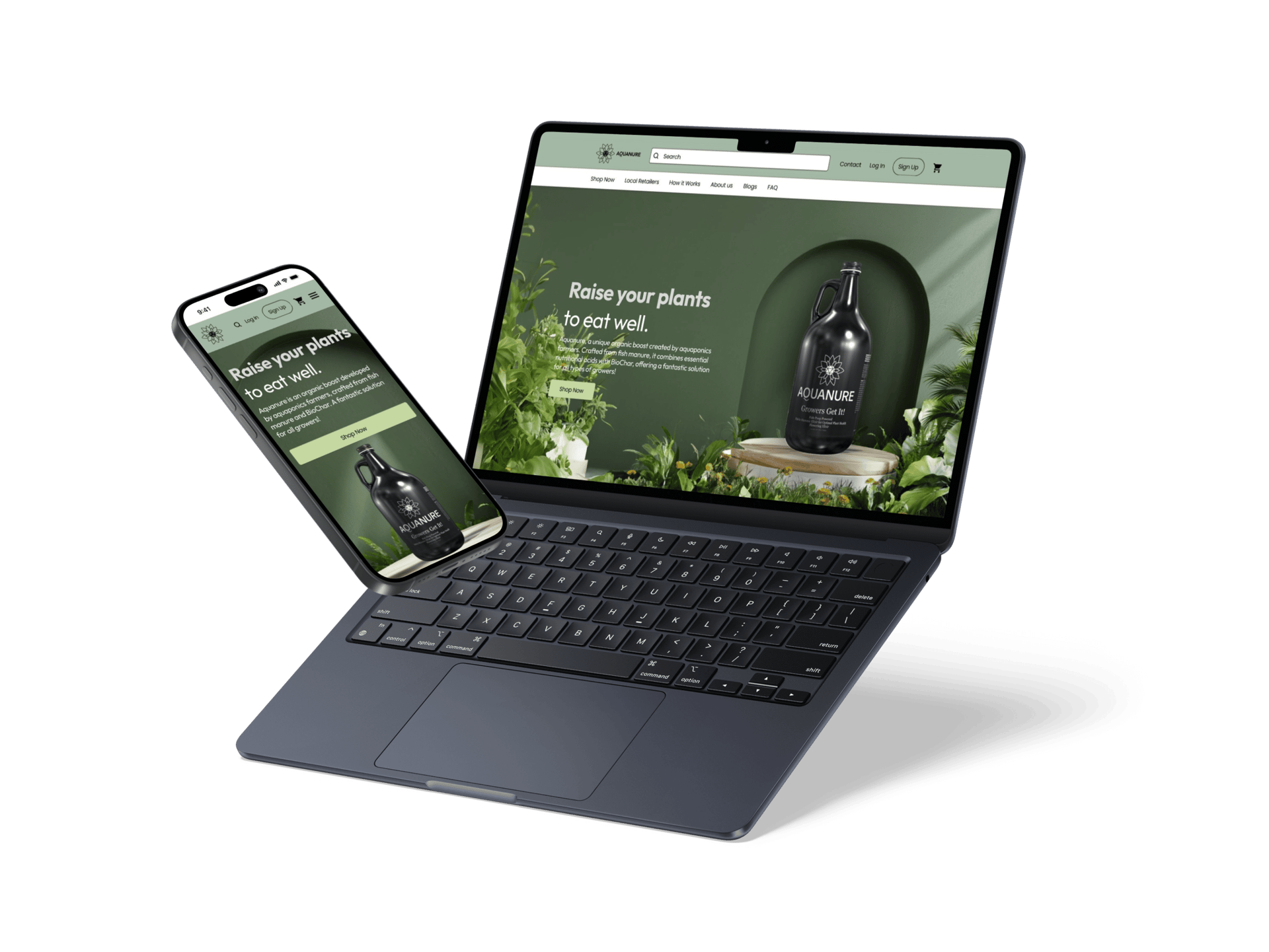
Aquanure Website Redesign
Link to the live website: https://www.aquanure.ca/
A research-led website redesign for a Canadian organic fertilizer brand, uncovering why a 64.3% bounce rate and zero online sales weren't just a design problem, but a communication and trust problem.
Aquanure is a Canadian organic fertilizer brand with a unique product derived from fish effluent and aquaponic farming. Despite offering an innovative and environmentally sustainable solution, their website had a 64.3% bounce rate and had never generated a single online sale.
My Role
Lead UX Researcher + UX/UI Designer
Led stakeholder interviews with company co-founder
Designed and conducted user interviews
Conducted competitive analysis (4 competitors)
Led card sorting for information architecture
Conducted usability testing (Lo-Fi & Mid-Fi)
Figma, Miro, Google suite, Flair, Slack, Zoom
Project Overview
Tools
Rob Clark, co-founder of Aquanure, approached our team with a clear business problem, a 64.3% bounce rate and zero online sales. His initial assumption was that the website needed a visual redesign.
But through stakeholder interviews and user research, I uncovered a deeper challenge: users didn't clearly understand the product, trust its benefits, or know how to purchase it. The real barriers weren't visual design alone, they were trust, clarity, and product awareness.
But was this really a design problem?
That was the question we set out to answer.
The Brief
"Why would anyone trust a product made from fish manure if they didn't even know what it was?"
Aquanure's website was struggling with a 64.3% bounce rate and zero online sales. But the deeper question wasn't how to make the site look better, it was why users were leaving in the first place.
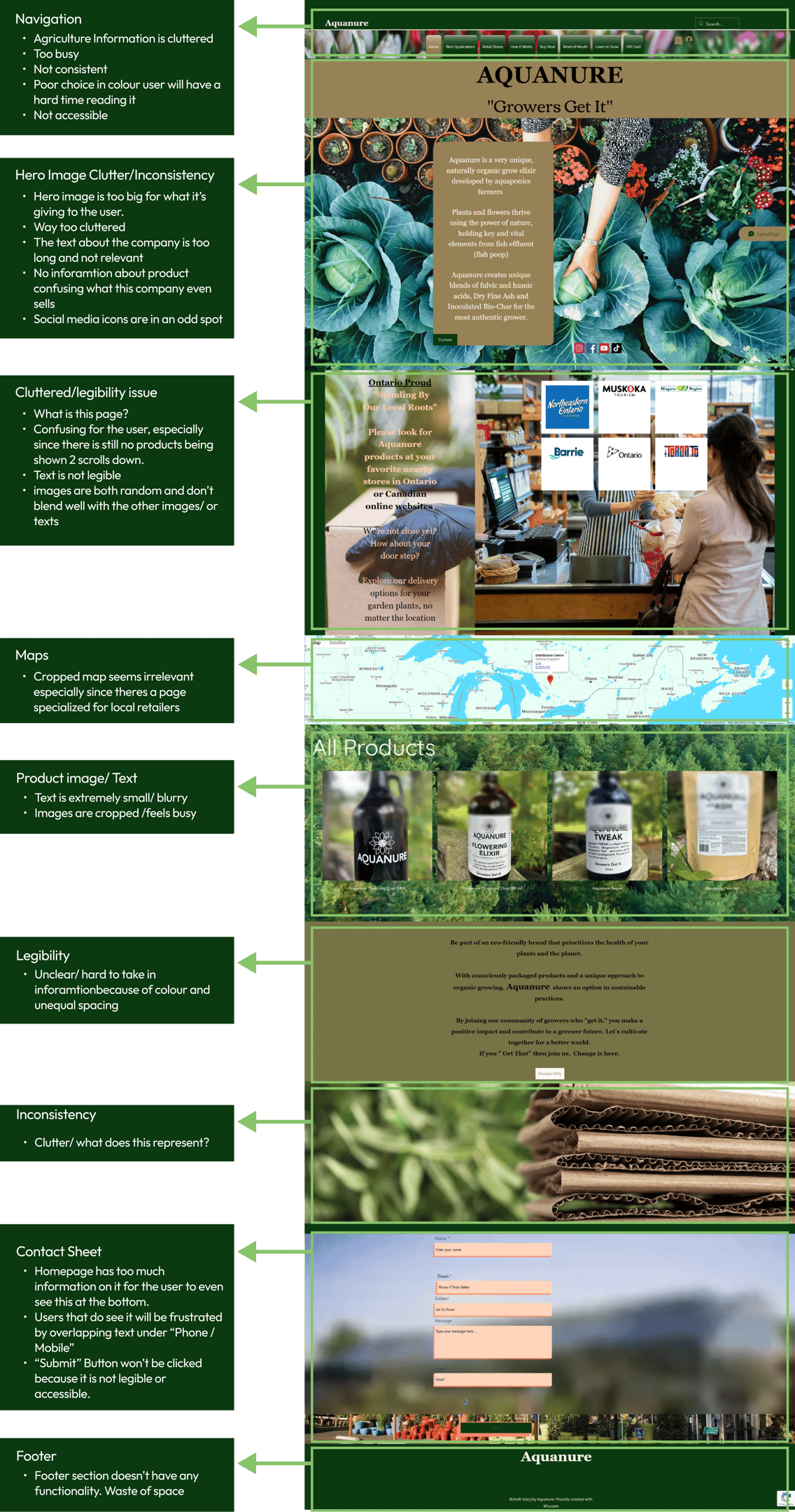
Through user interviews and competitive analysis, the answer became clear. Users weren't leaving because the site looked bad. They were leaving because they didn't understand what they were buying, didn't trust it, and couldn't figure out how to purchase it even if they wanted to.
The real barriers weren't visual design alone, they were trust, clarity, and product awareness.
The Problem
Before redesigning anything, I needed to answer:
Why are users leaving the site so quickly?
Do users understand what Aquanure actually is?
What barriers exist between landing on the site and making a purchase?
How do users typically shop for plant and gardening products?
Research
Research Goals
The insight that changed everything:
Users weren't confused because of bad design. They were confused because they didn't understand the product. The redesign needed to educate first, sell second.
Step 2: User Interviews
My first step was understanding the business goals and constraints directly from the client. I met with Rob Clark, Aquanure's co-founder, to:
Understand the company's sales goals and pain points
Identify which sections of the website were most critical to the business
Align on what success would look like for this redesign
Key takeaway from stakeholder interview: Rob's primary goal was to drive online sales. The website had never converted a single online customer. Understanding WHY became my research mission.
Key findings and Pain Points:
Finding 1, Checkout confusion
100% of users were unable to complete the checkout process, describing the experience as confusing and illegible.
Pain Point: Users felt frustrated and lost, ultimately giving up on their purchase entirely.Finding 2, Unfamiliar ingredient
Most users had no idea fish manure was used as fertilizer, causing immediate confusion and skepticism about Aquanure's primary ingredient.
Pain Point: Users felt uncertain and distrustful of a product they couldn't understand, making them reluctant to even consider purchasing it.Finding 3, Trust and familiarity
Users who shop for plant products tend to stick to familiar retailers and brands they already know.
Pain Point: Aquanure felt unfamiliar and unestablished, making it difficult to compete for user trust against well-known brands.Finding 4, Visual inconsistency
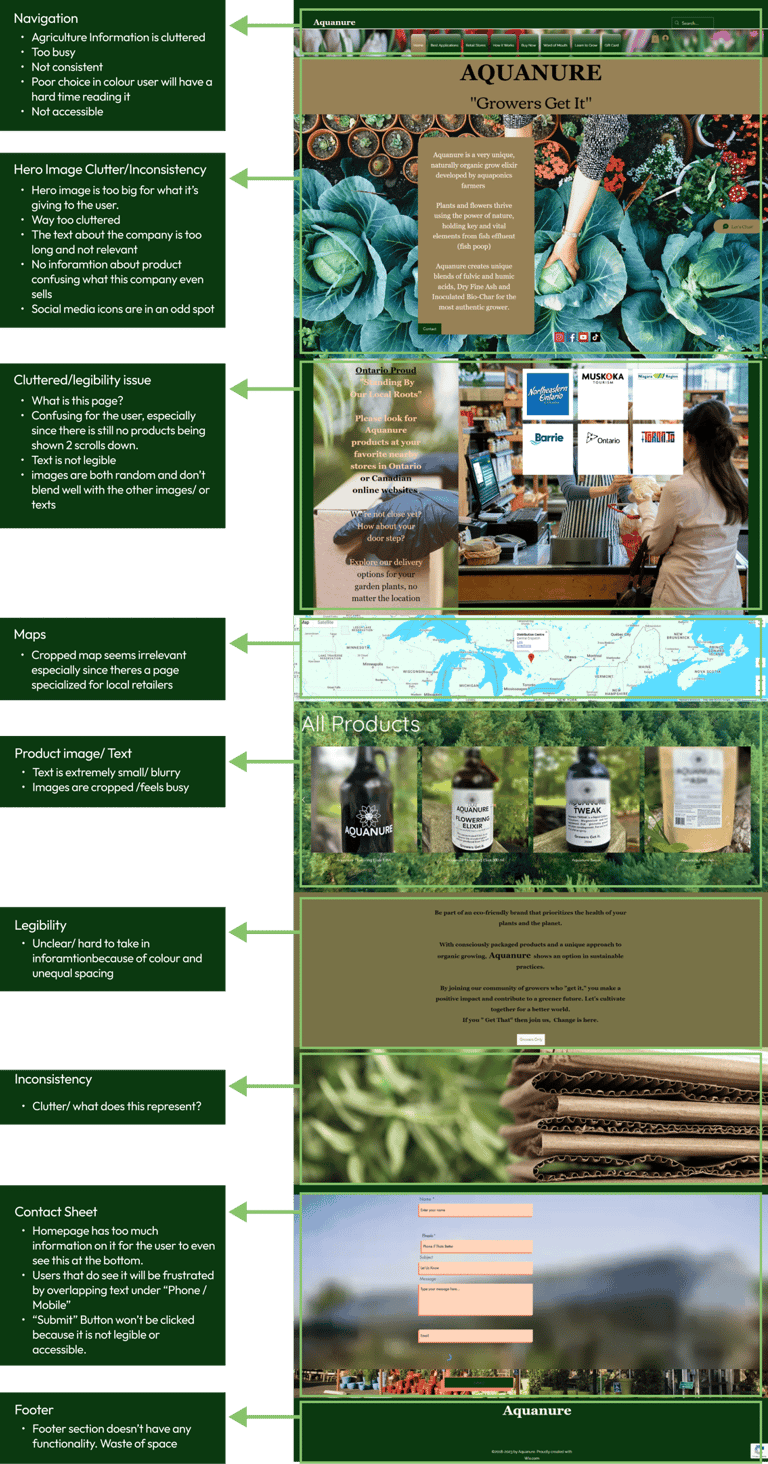
Inconsistency across pages made users question the legitimacy and professionalism of the brand.
Pain Point: Users felt uncertain about whether Aquanure was a trustworthy business, reinforcing their hesitation to purchase.
Notable user quotes:
After the stakeholder session, I designed and conducted user interviews to understand how real users experienced the site.




Step 1: Stakeholder Interview (Rob Clark, Co-Founder)
Competitive Analysis


Gap identified: Competitors that performed well all had one thing in common: they made unfamiliar ingredients feel natural and trustworthy through education and clear visual communication. Aquanure had none of this.


I analyzed 4 competitors to identify gaps and opportunities. Here is a brief:
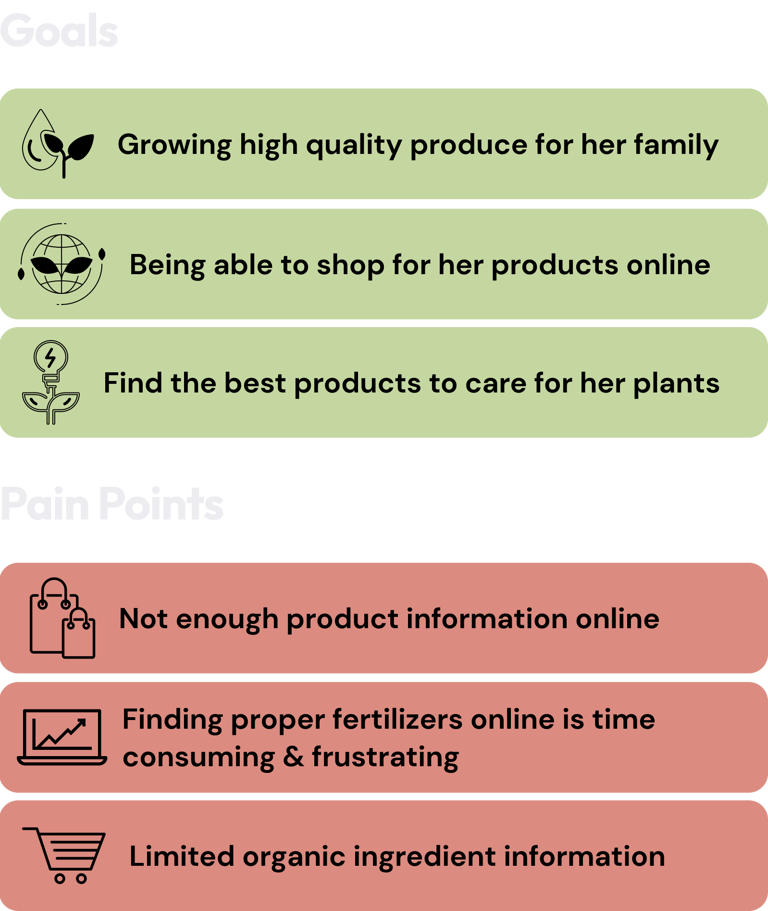
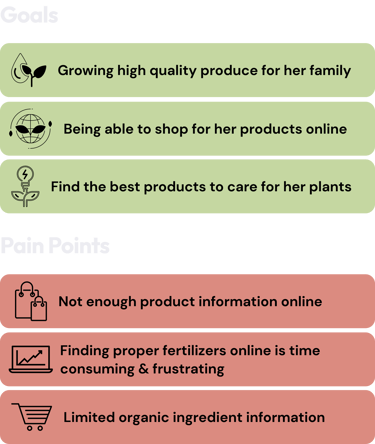
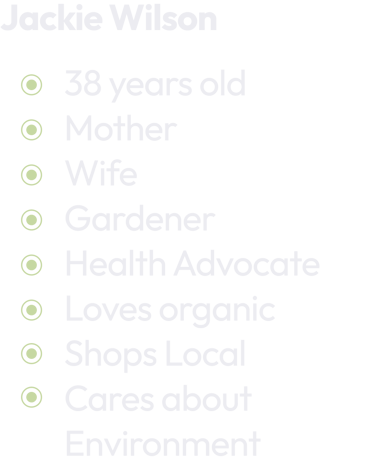
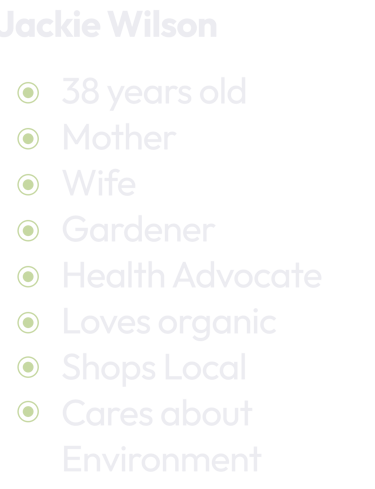
User Persona


HMW Statement
How might we improve Aquanure’s UX/UI so that customers can successfully purchase Aquanure products online?
Design Principle
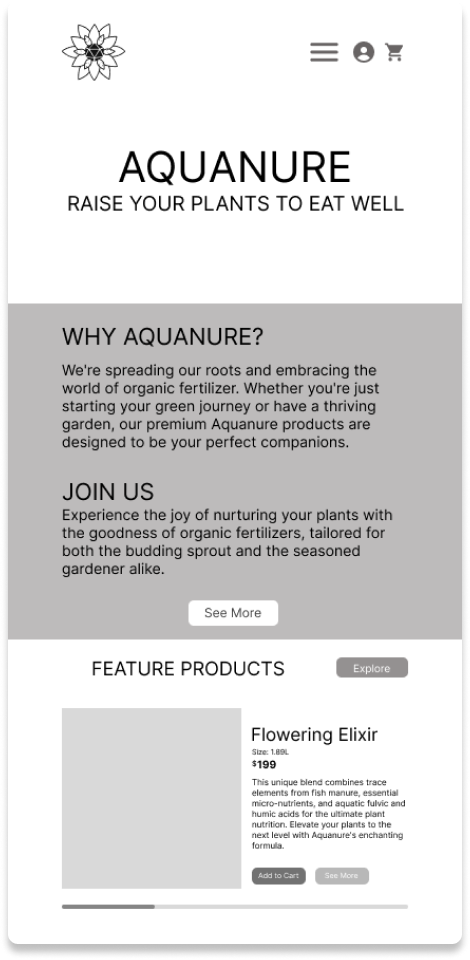
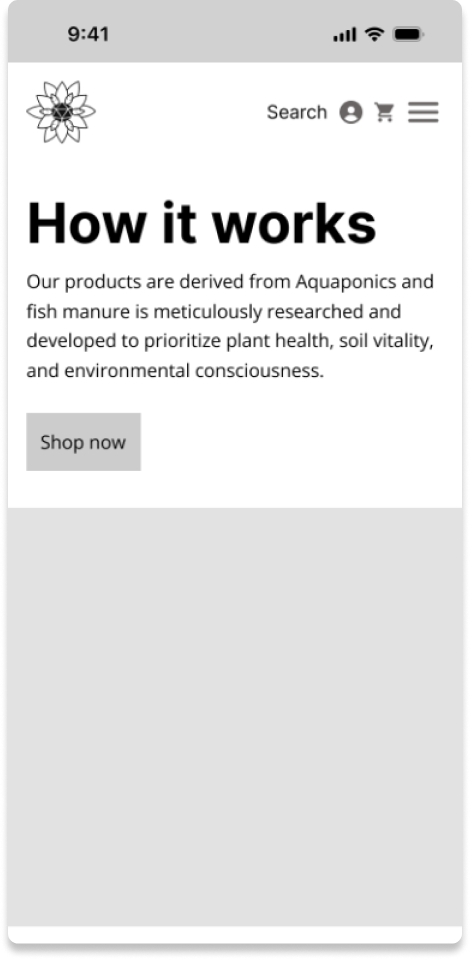
Education first - explain what it is before asking users to buy
Clarity & guidance - simplify and guide every step of the purchase journey
Build trust - use social proof, clear ingredient communication, quality imagery
Visual consistency - unified design system across all pages
Mobile-first - optimize for mobile from the start
KEY INSIGHTS → Design Principles
Every design principle was derived directly from a research finding:
Research Finding
Users didn't understand the product
100% confused by checkout
Trust was the real barrier
Inconsistency caused distrust
Mobile shopping is growing
Homepage
Design Process
1. Analyze
Product Page
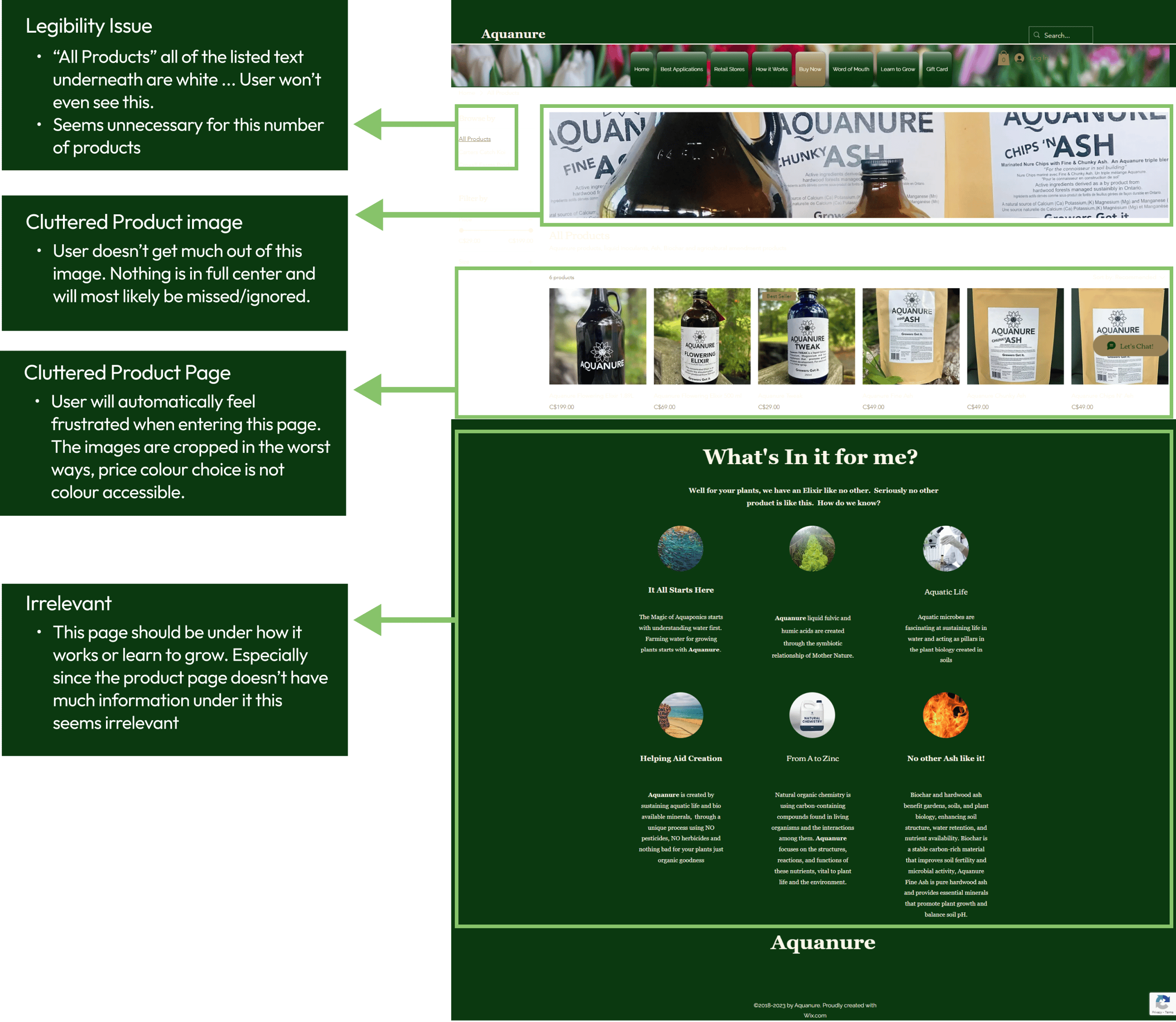
2. Ideation & Design
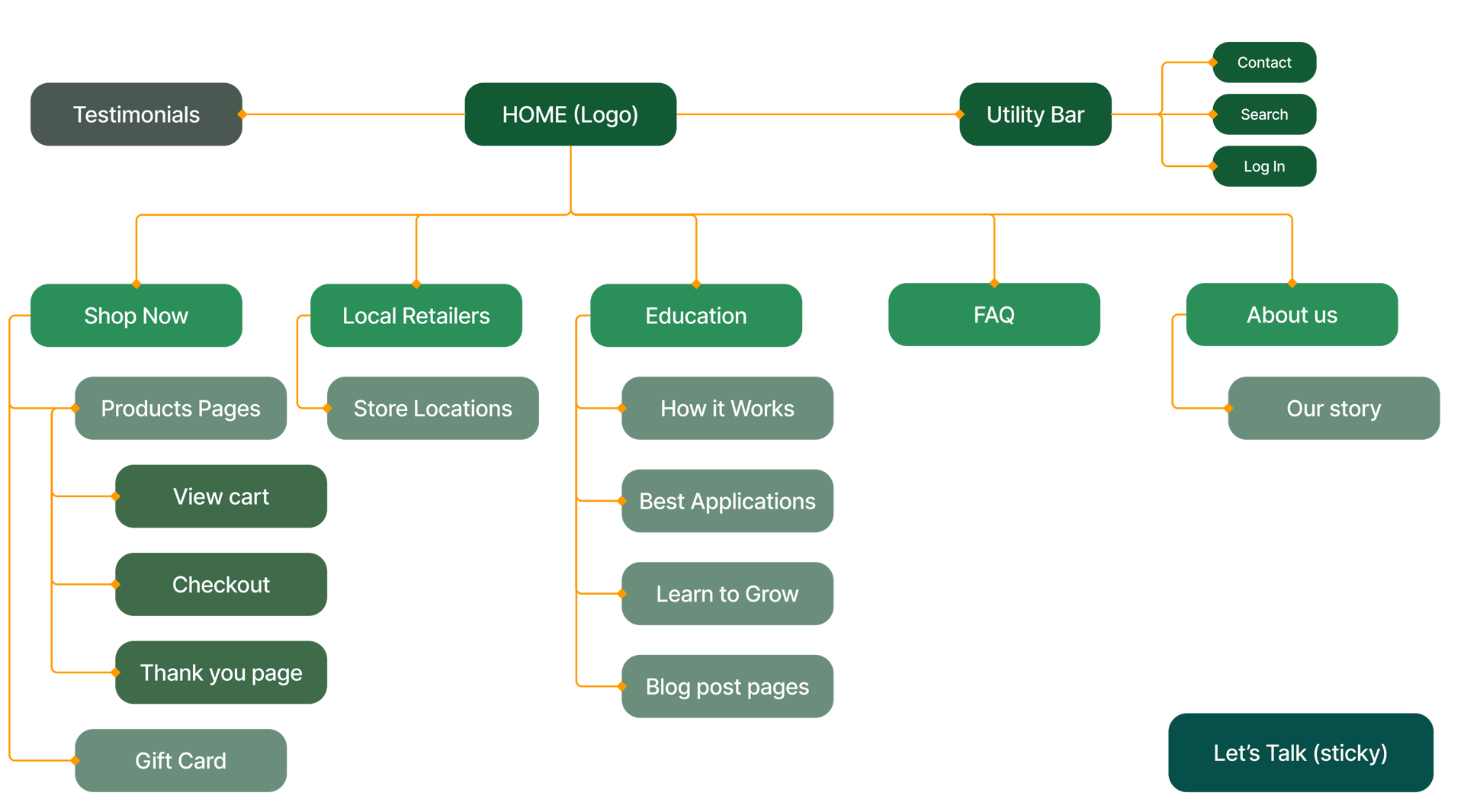
Redesigning Information Architecture (Card Sorting)
Research finding that drove this:
Users couldn't find information intuitively. They expected product education before being asked to buy, and couldn't locate "how to use" information easily.
To address this, I used card sorting to understand how users naturally organize product information. This exercise revealed that users expected:
A clear product explanation before anything else
Easy access to "how to use" information, not buried in FAQs
A streamlined path from product discovery to checkout
The outcome:
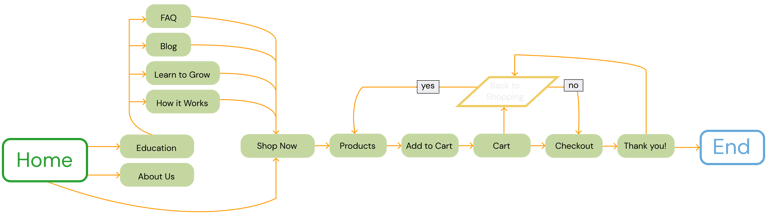
A revised sitemap that reorganized pages around the user's mental model rather than the company's internal structure, putting education and product clarity front and center.
Sitemap



Research finding that drove this:
Users got lost during checkout and couldn't find their way back. The purchase journey had no clear path.
Based on the sitemap, we designed a user flow that mapped the clearest possible path from landing on the homepage to completing a purchase, with clear entry and exit points at every stage.
User Flow

Sketches
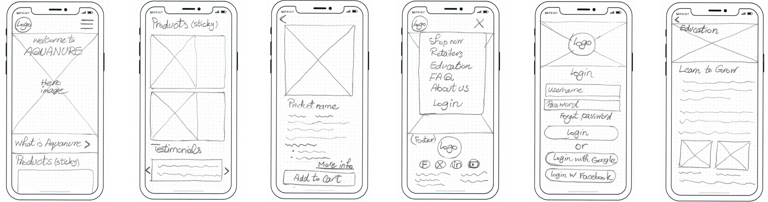
Research finding that drove this: Users wanted to see the product clearly and understand what it was before anything else.
In my sketches I prioritized:
Product imagery front and center on the homepage
Clear ingredient explanation above the fold
A visible and simple path to the product page and checkout

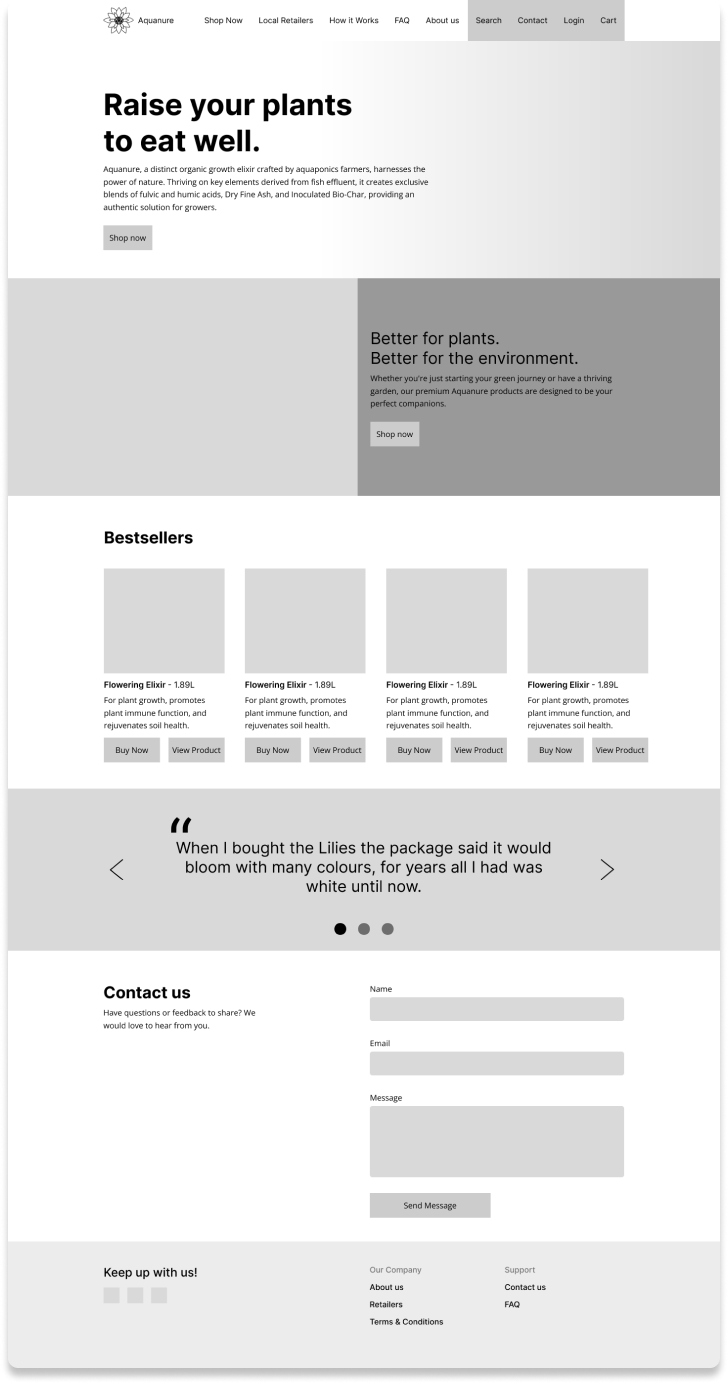
Low Fidelity Wireframes
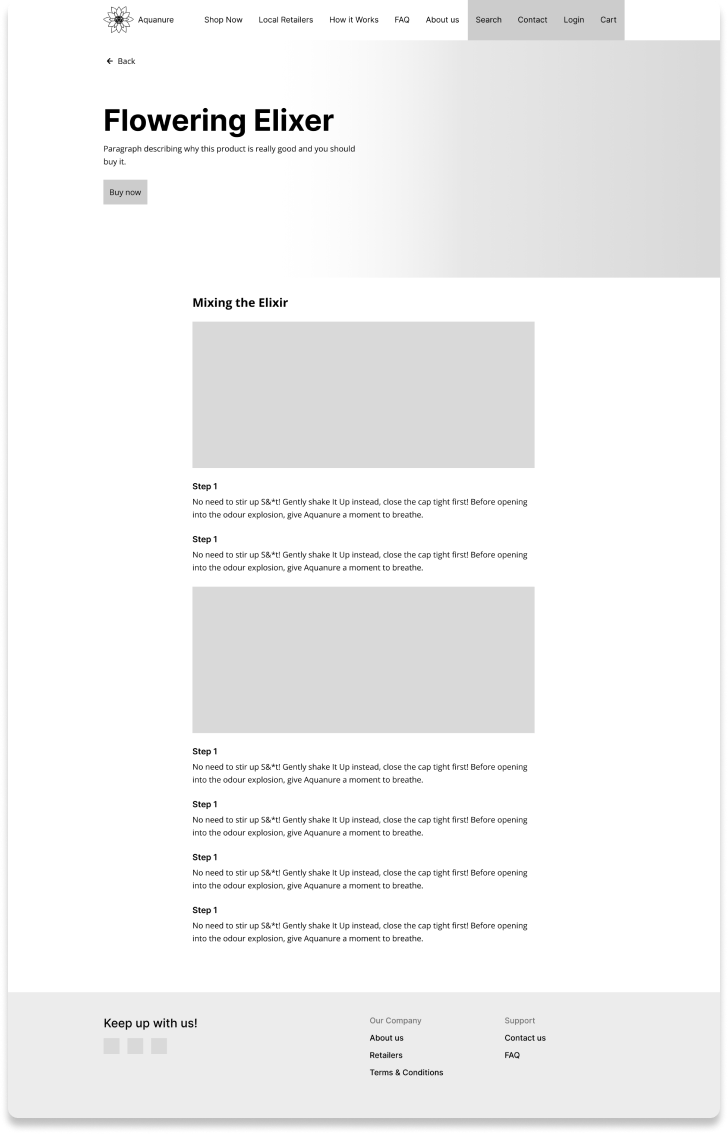
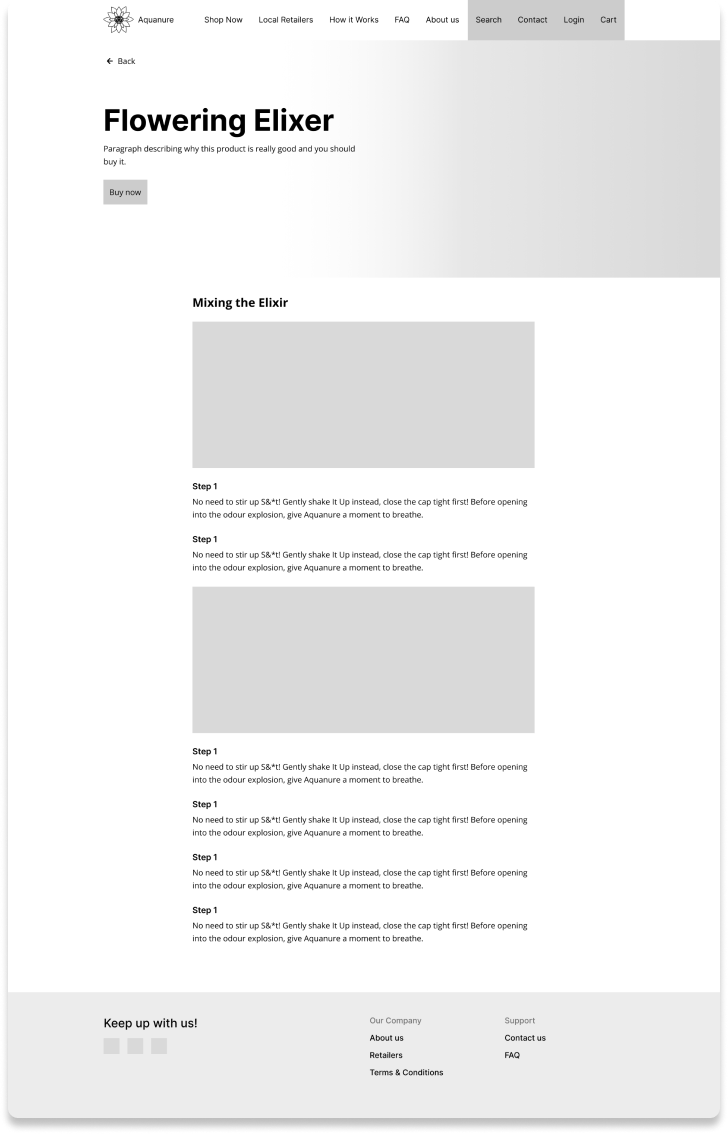
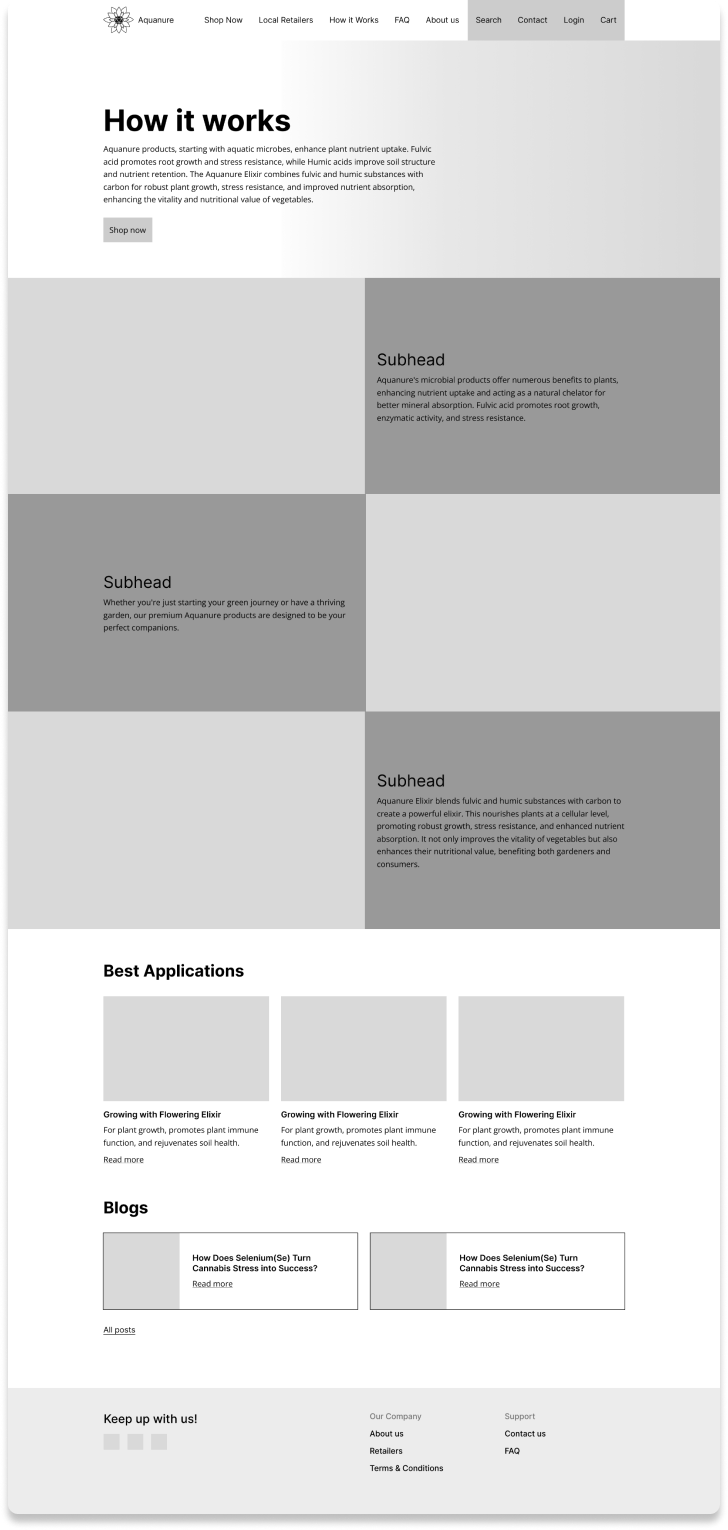
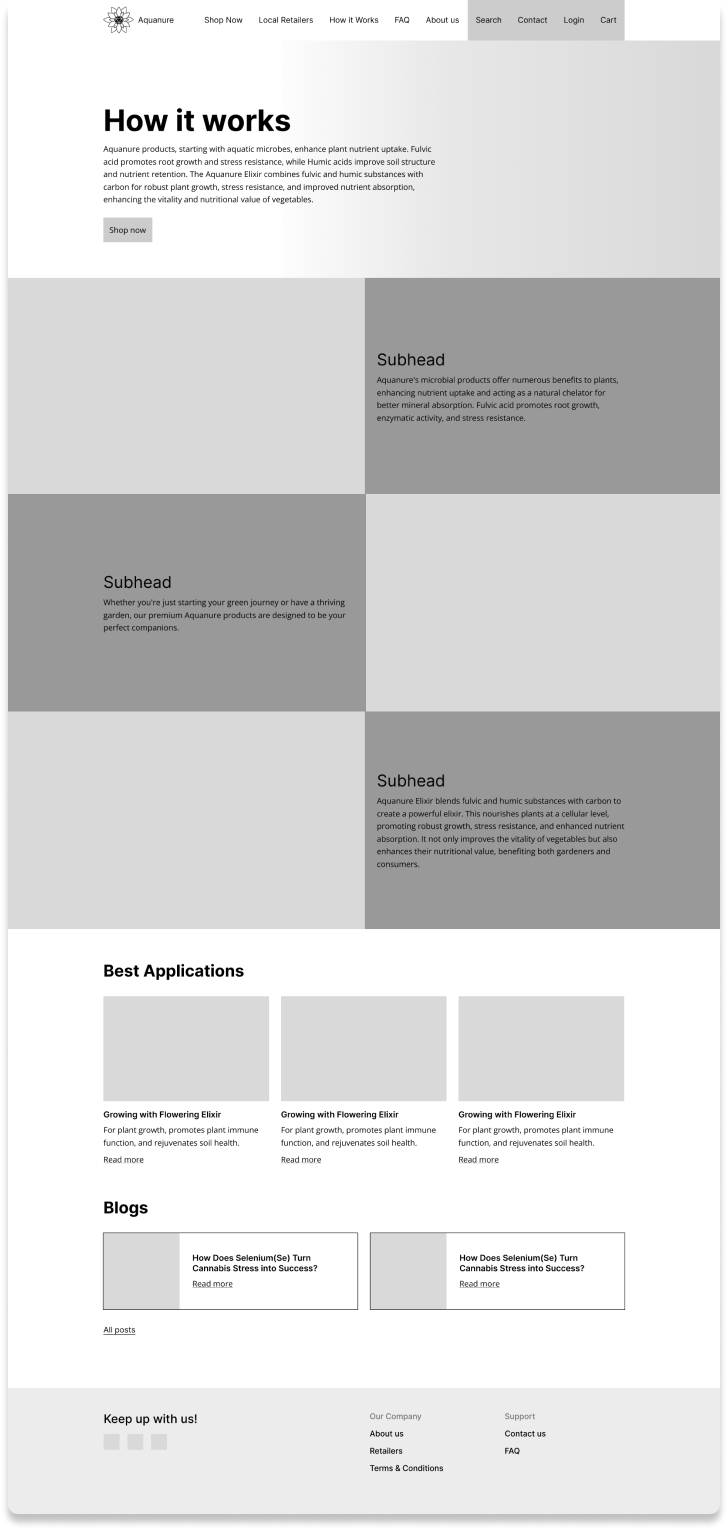
Homepage
Product Page
Education
Desktop
Mobile
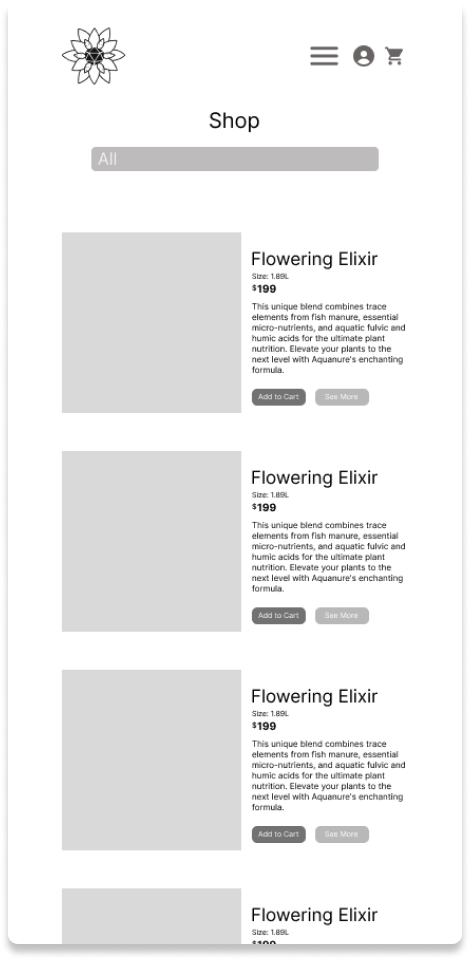
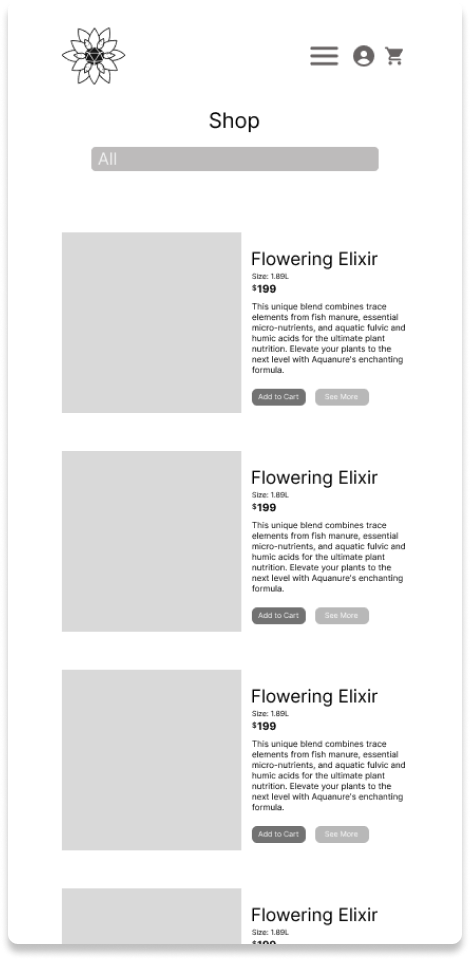
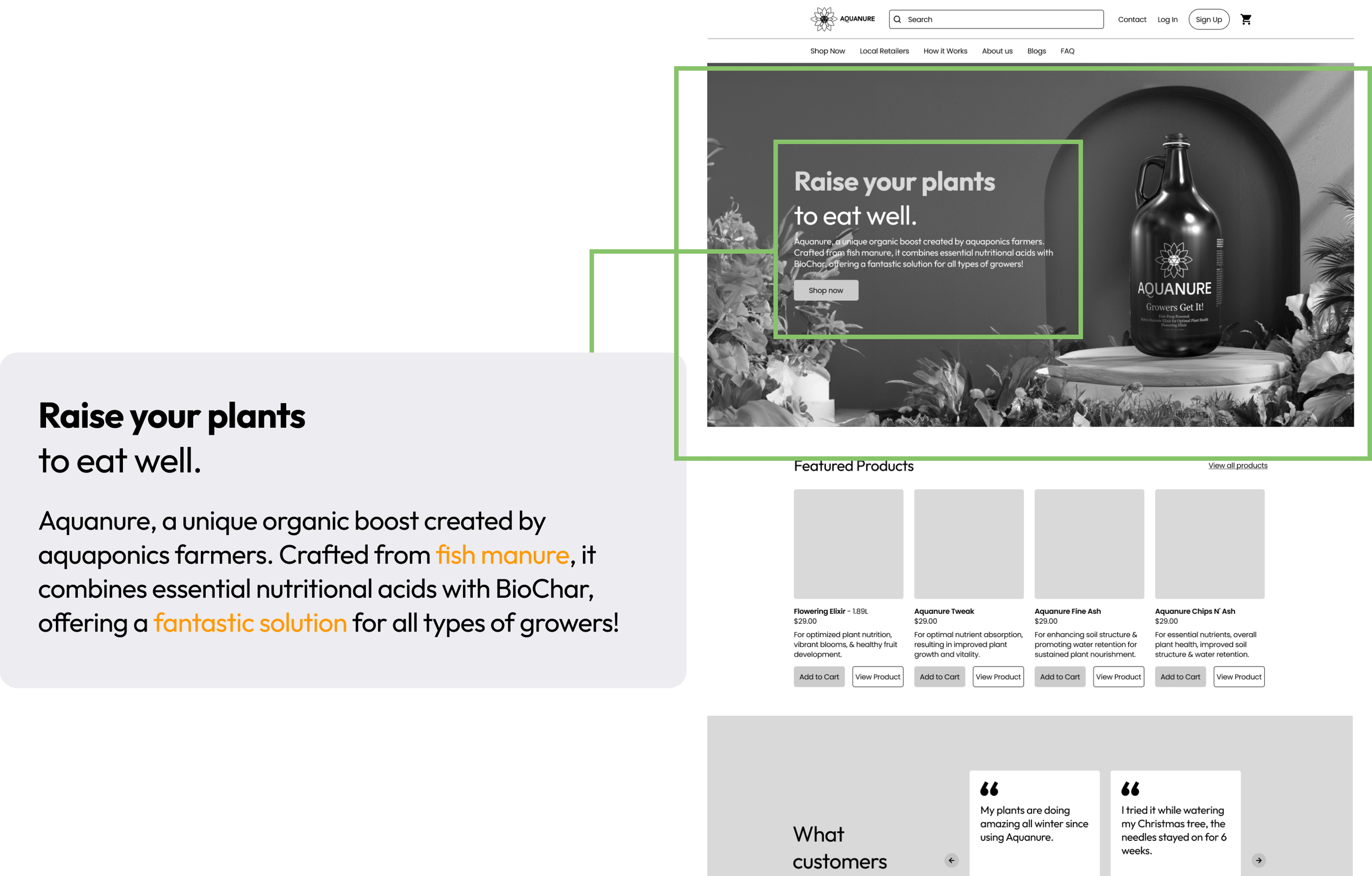
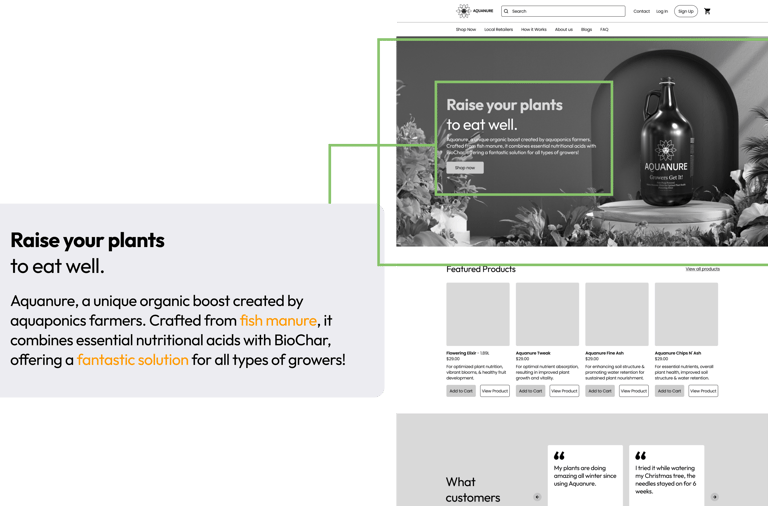
User Testing & Iterations
Finding 2: The fish manure ingredient needed to be highlighted, not hidden Counterintuitively, users felt MORE trust when the ingredient was explained clearly and confidently, not when it was downplayed → We added clear, educational copy about the ingredient on the homepage and product page.
I conducted usability testing at two stages, Lo-Fi and Mid-Fi, to validate design decisions with real users before moving to high fidelity.
Finding 1: Product imagery was critical Users immediately responded better to pages with strong, clear product photography. Without it, the product felt untrustworthy. → We prioritized high-quality imagery throughout all pages.
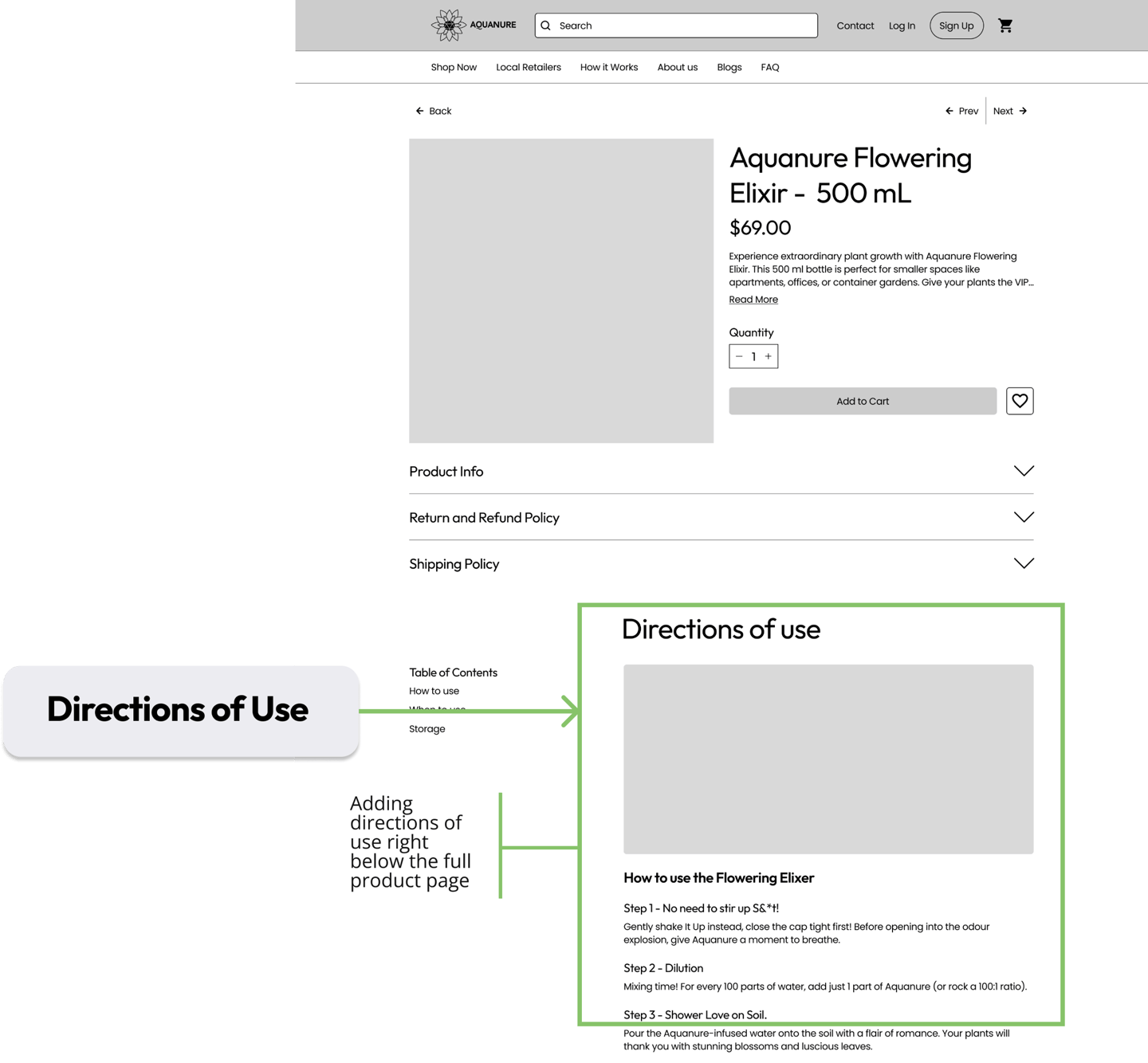
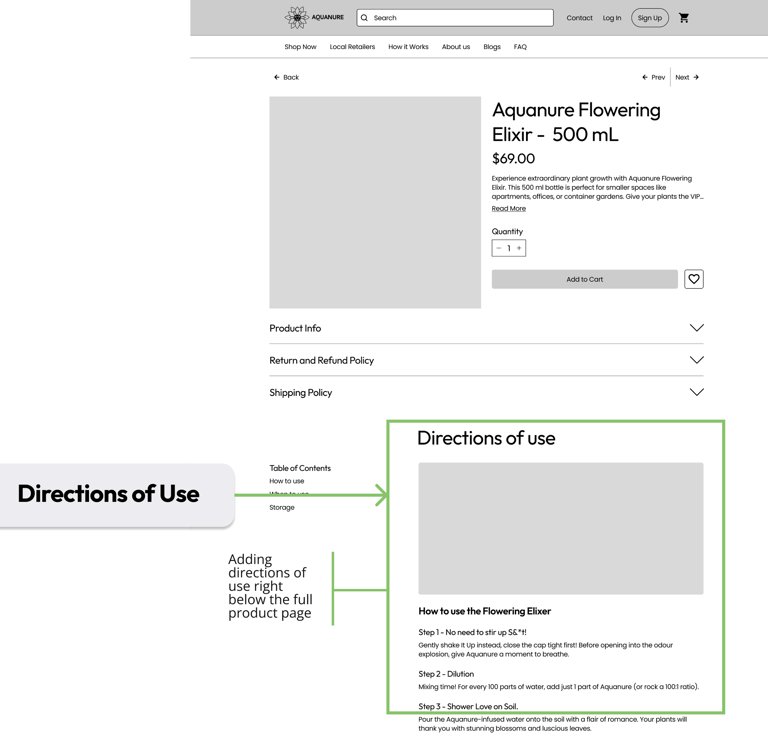
Finding 3: Users expected "how to use" guidance to be immediately accessible, yet product usage and ingredient mixing information was scattered and difficult to locate, creating friction in the user journey.
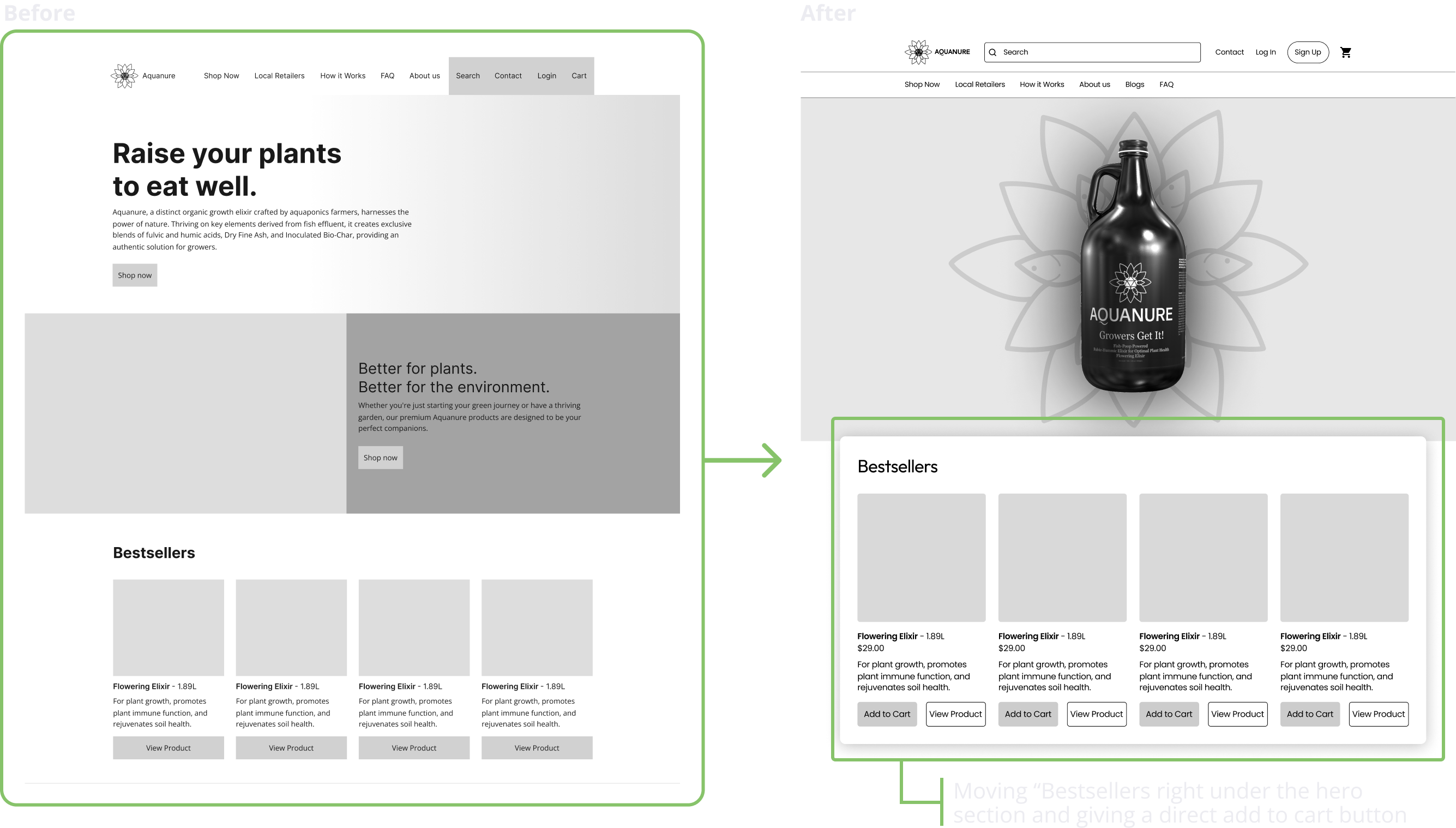
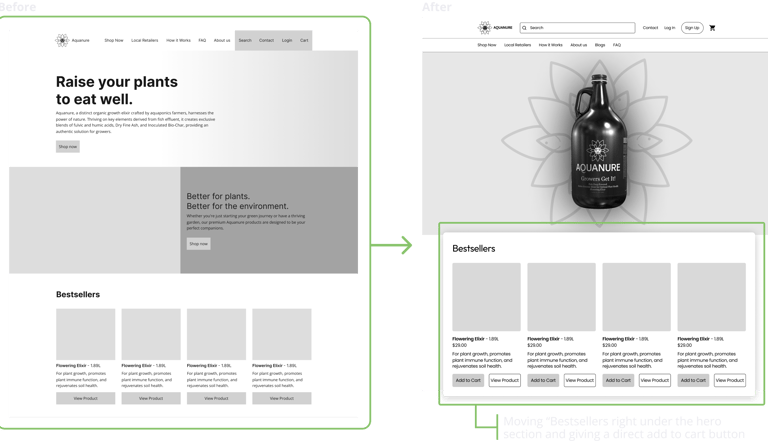
Finding 4: Returning customers needed a faster path to purchase Power users wanted to skip the education and go straight to buying. → We added an "Add to Cart" button to product cards.
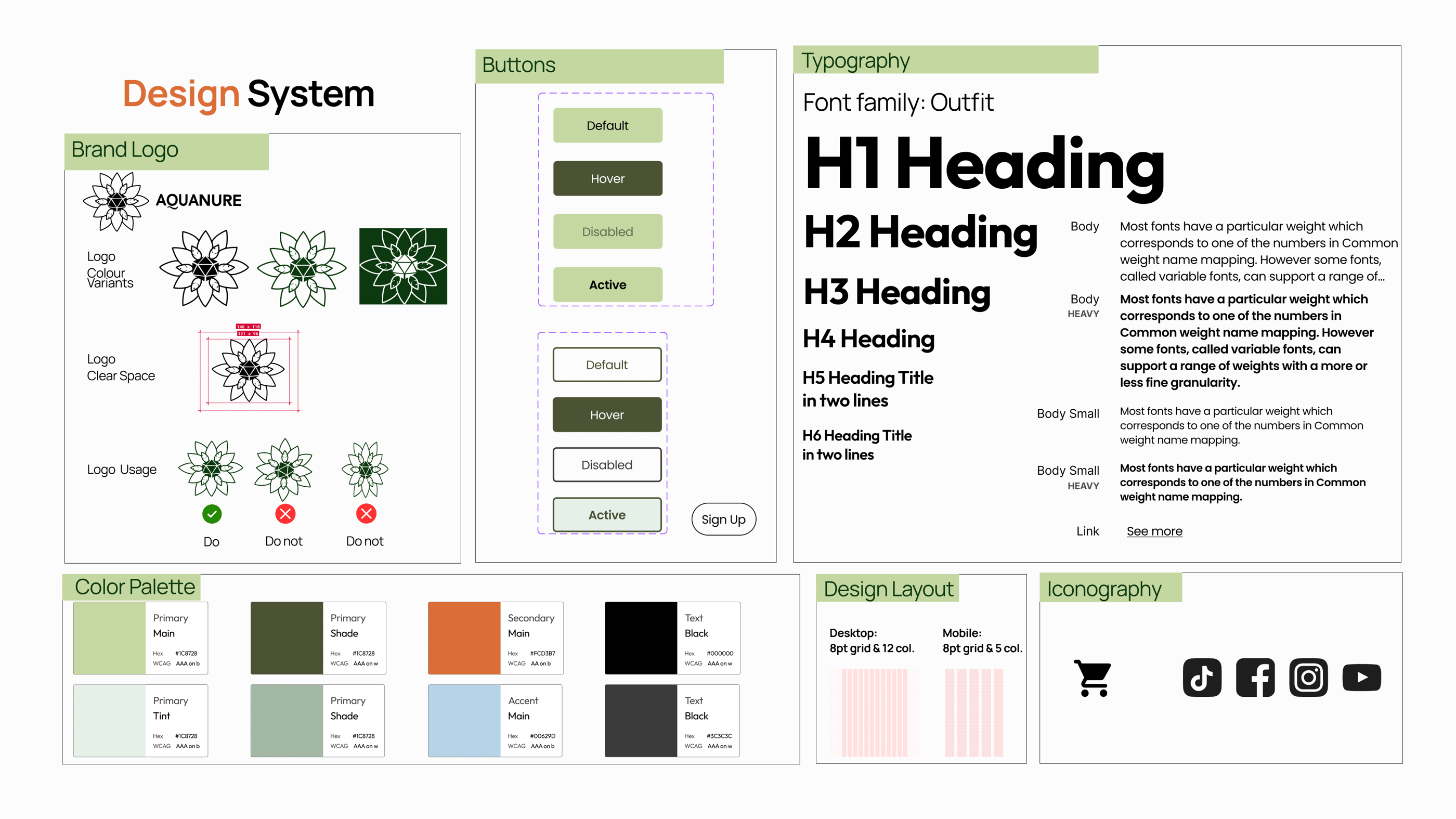
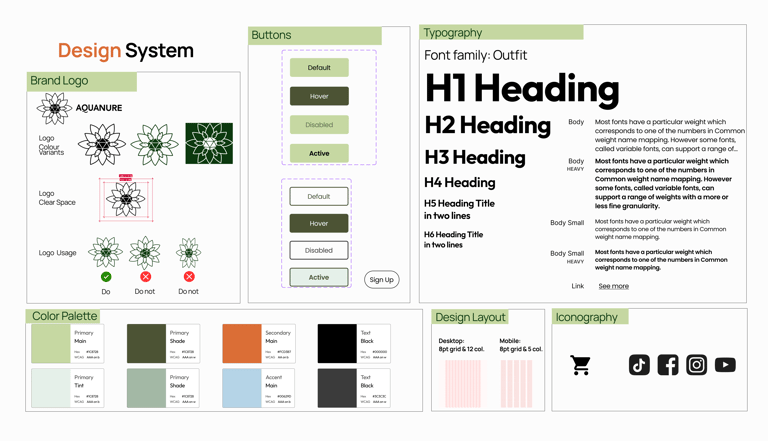
Based on research findings around trust and visual consistency, we developed a design system that ensured:
A unified color palette that felt organic and trustworthy
Consistent typography across all pages
Standardized component library to eliminate the inconsistency users flagged in research
Design System
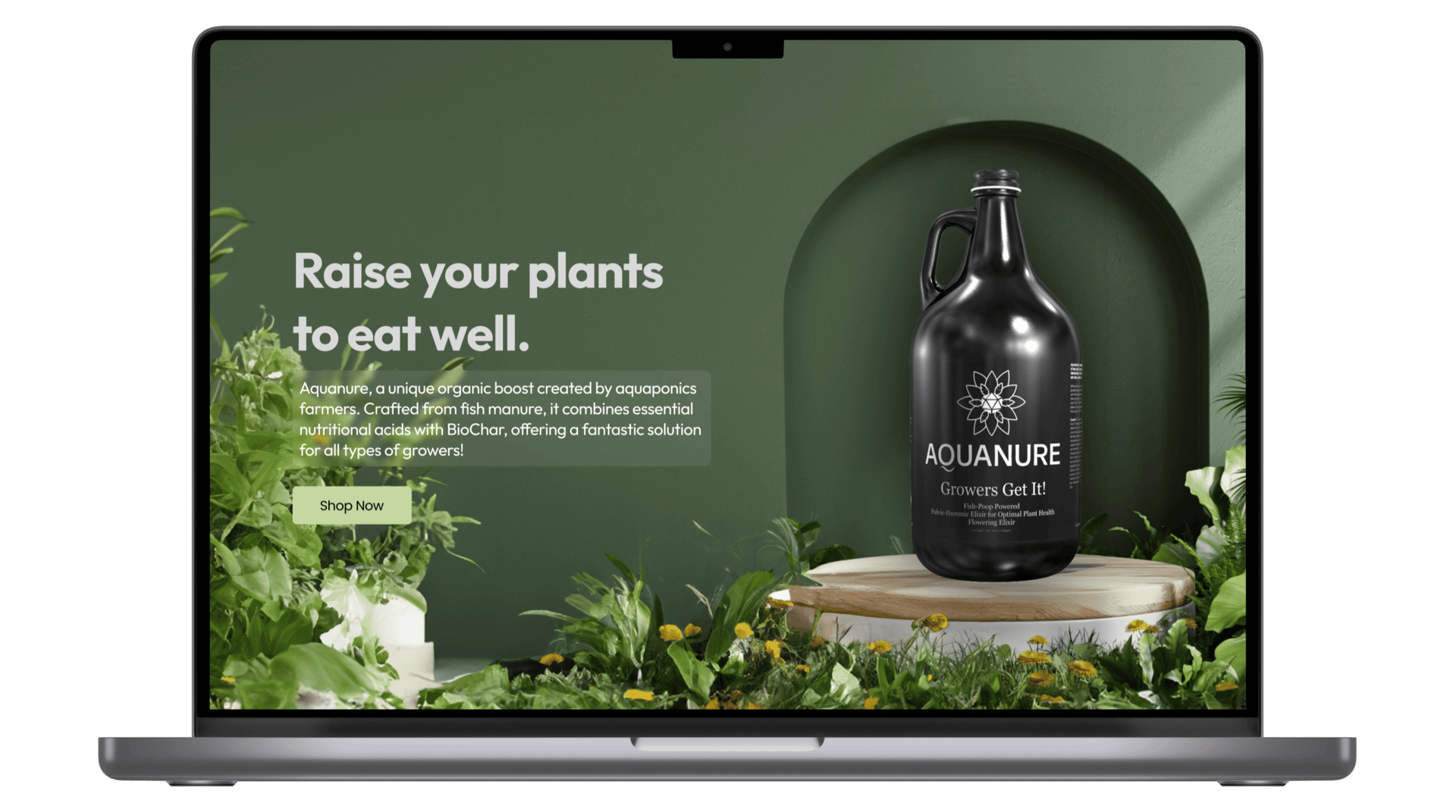
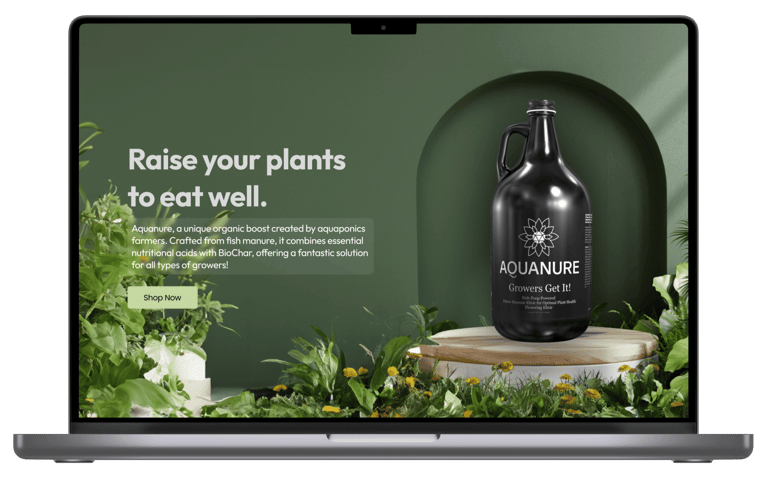
Hi Fidelity Prototype
3. Delivery
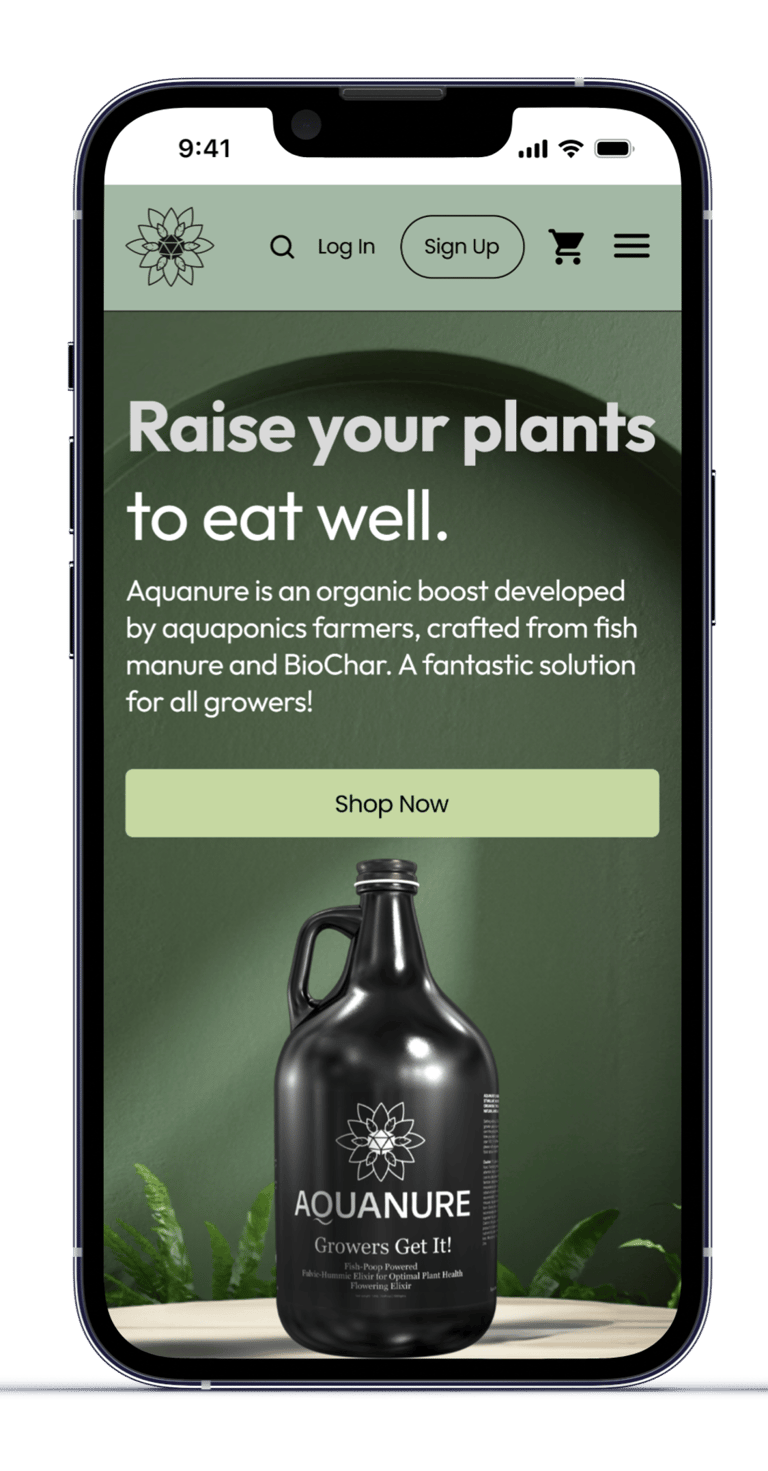
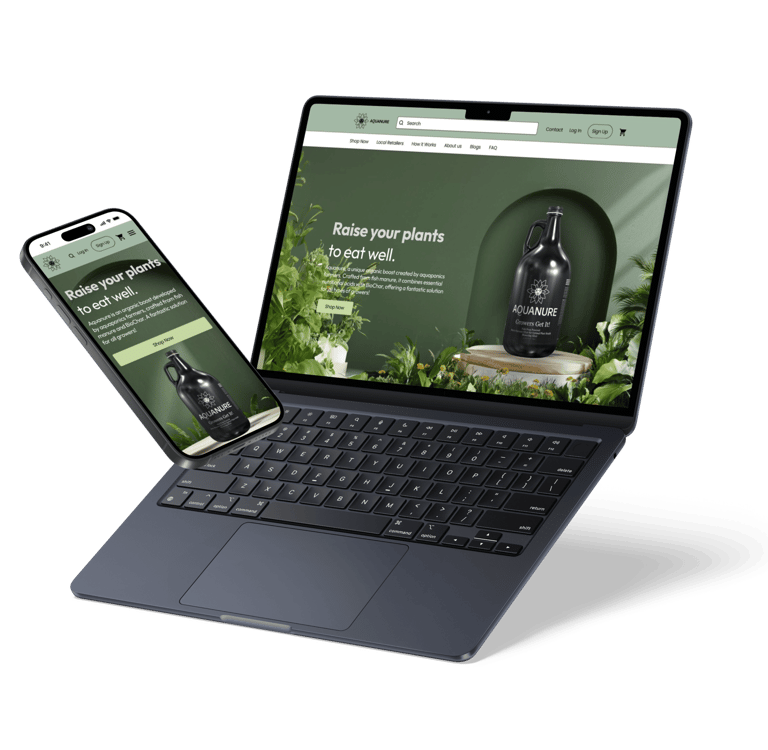
The final responsive design was delivered for both desktop and mobile, with a complete prototype available for stakeholder review.
Next Steps
Measure impact: Track bounce rate and online conversion rate post-launch to validate research-driven design decisions
Longitudinal usability study: Do users return after first purchase? Does the education-first approach build brand loyalty?
Accessibility audit: Conduct usability testing with users who have visual impairments or low digital literacy
A/B test ingredient messaging: Test different ways of communicating the fish manure ingredient to optimize trust-building
Lessons Learnt
What this project taught me as a researcher:
Question the brief. The client said "we need better design." Research revealed the real problem was trust and product comprehension. Never accept the first problem statement at face value.
Stakeholder research is real research. Understanding Rob's business goals was as important as understanding user needs. Great UX research bridges both.
Data changes conversations. When I showed Rob that 100% of users couldn't complete checkout, it immediately shifted the conversation from aesthetics to function. Numbers give researchers credibility.
Unfamiliar products need education-first design. When a product challenges assumptions (fish manure as fertilizer!), design must build understanding before building desire.
Credits
This project was a team effort. Special thanks to my teammates Josie, Rebecca, Daniel, and Sunny, and to Rob Clark, Co-Founder at Aquanure, for his trust and collaboration throughout the process.